Meet the Dog
A chihuahua and a great dane are the same species. So are a dachshund, a greyhound and a St Bernard. No other animal on Earth varies as much as the dog, and all of it came from wolves.
The dog was also the first animal people ever domesticated, somewhere between 15,000 and 30,000 years ago, long before farming, sheep, cattle or cats. We were still hunter-gatherers when dogs joined us.
And they understand us in ways no other animal does. A dog follows a pointing finger, which even chimpanzees struggle with, and reads human faces for information.
Scientific Name and Classification
The domestic dog is Canis familiaris. You will also see Canis lupus familiaris, which treats it as a subspecies of the gray wolf. Both appear in scientific writing, and the disagreement is about how separate a domestic animal really is from its wild ancestor.
- Kingdom: Animalia
- Phylum: Chordata
- Class: Mammalia
- Order: Carnivora
- Family: Canidae
- Genus: Canis
- Species: Canis familiaris
Every dog alive descends from gray wolves, though not from the wolves living today. Both came from a wolf population that is now extinct, so a modern wolf is a dog’s cousin rather than its ancestor.
Dogs can still interbreed with wolves, coyotes and jackals and produce fertile young, which shows how close those relationships remain.
How Did Dogs Become Domesticated?
Probably not the way people imagine. The old picture of humans adopting wolf cubs and taming them does not fit the evidence well.
The likelier story is that wolves domesticated themselves. Human camps produced waste, and the bolder, less fearful wolves fed on it. Those wolves ate better and raised more cubs, so each generation was a little more tolerant of people. Over time they became a different animal.
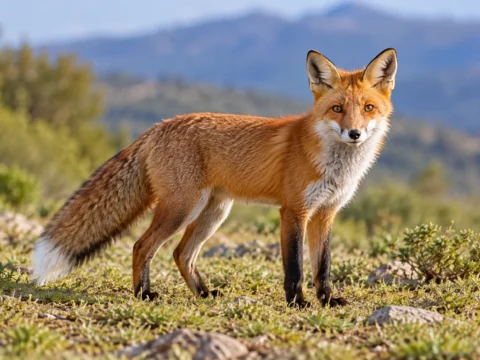
The famous Russian fox experiment supports this. Breeding foxes purely for friendliness produced animals that wagged their tails and sought human company within decades, and they also developed floppy ears, curly tails and white patches that nobody selected for. Tameness appears to drag those traits along with it.
Dates are still argued over, with estimates between 15,000 and 30,000 years ago, and it may have happened more than once in different places.
Types of Dog and Their Characteristics
There are around 350 recognized breeds, usually sorted by the job they were bred to do.
| Group | Bred to | Examples |
|---|---|---|
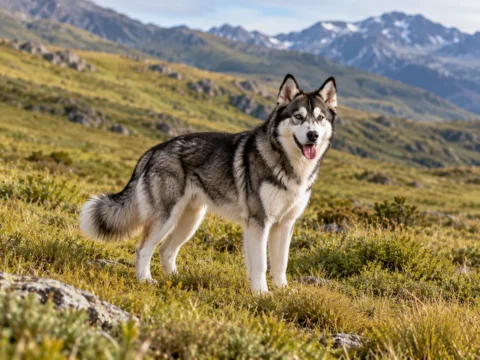
| Herding | Move livestock | Border collie, Alaskan shepherd |
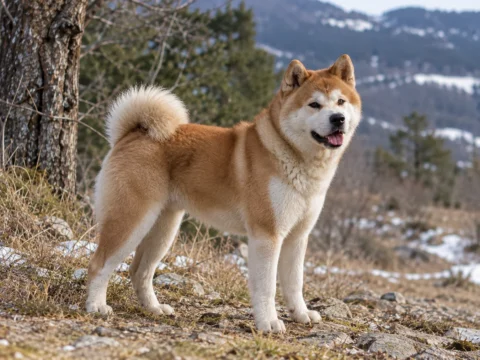
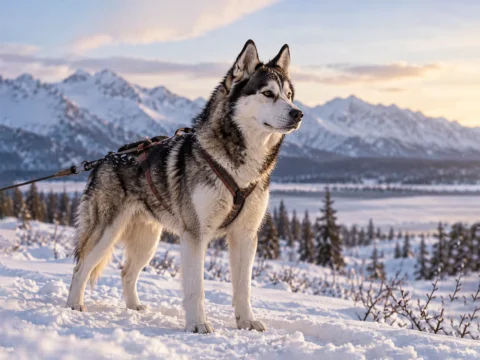
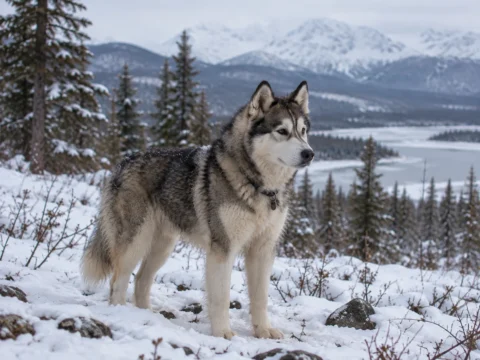
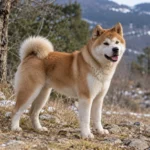
| Working | Pull, guard, rescue | Akita, Alaskan husky |
| Terrier | Hunt vermin underground | Airedale terrier, affenpinscher |
| Hound | Track or chase game | Beagle, greyhound |
| Gundog | Find and retrieve birds | Labrador, spaniel |
| Toy | Companionship | Chihuahua, pug |
That last point surprises people. Dogs have been with us for tens of thousands of years, but the tidy, standardized breeds we know mostly date from Victorian dog shows onward.
Appearance and Anatomy
Dogs range from chihuahuas at 2 pounds and 6 inches tall to great danes and mastiffs over 200 pounds and 3 feet at the shoulder. That is a greater size range than any other land mammal species.
- Nose. The headline feature. A dog has up to 300 million scent receptors against about 6 million in a human, and a far larger share of its brain devoted to smell. Estimates put their sense of smell as tens of thousands of times better than ours.
- Nose print. The pattern of ridges on a dog’s nose is unique to the individual, like a fingerprint.
- Ears. Able to hear much higher frequencies than we can, and many breeds swivel them to locate sound.
- Eyes. Good at detecting movement and seeing in low light. Dogs are not colorblind, but they see fewer colors than we do, mostly blues and yellows.
- Paws. One of the few places dogs sweat, though they cool themselves mainly by panting.
Dogs can smell things we have no way to detect, including some diseases, changes in blood sugar and seizures before they happen.
Habitat and Range
Dogs live wherever people do, on every continent including Antarctic research stations in the past.
There are around 900 million dogs worldwide, and most of them are not pets. A large majority are free-ranging village or street dogs, living around people without belonging to anyone.
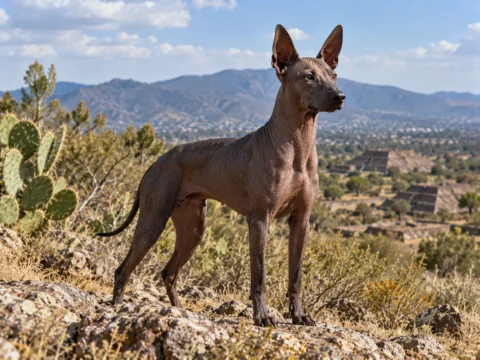
Some breeds are built for extremes. Huskies work in temperatures far below freezing, while hairless breeds come from hot climates.
Diet and Feeding
Dogs are omnivores, and this is a real difference from cats. A cat is an obligate carnivore and must eat meat; a dog can digest starch and live on a mixed diet.
That difference is itself a product of domestication. Dogs have extra copies of a gene for digesting starch that wolves lack, acquired as they lived alongside farming people.
Several ordinary human foods are dangerous to dogs, and this is worth knowing: chocolate, grapes and raisins, onions and garlic, and the sweetener xylitol are all toxic, and some are dangerous in small amounts.
Dogs bolt their food because their ancestors competed at a carcass. They also have far fewer taste buds than we do, which is why they are not fussy, and they judge food largely by smell.
Behavior and Lifestyle
Dogs are social animals that form strong attachments, and what makes them unusual is how well they read us.
A dog follows a human pointing finger to find hidden food. That sounds trivial and is not: chimpanzees, our closest relatives, mostly fail the same test. Dogs also look at a person’s face for guidance when they are unsure, which wolves raised by humans do not do.
They understand words. Average dogs learn around 165, and exceptional individuals have learned over a thousand object names and retrieved the right one on command.
Tail wagging is more informative than most people realize. Research suggests a wag biased to the dog’s right side tends to go with positive feelings and a left bias with unease, and other dogs respond differently to each.
The old idea that owners must be pack leaders dominating their dog has been largely abandoned by behaviorists. It was based on studies of captive wolves that turned out not to describe wild wolf families, let alone dogs.
Reproduction and Life Cycle
Pregnancy lasts about 63 days and produces a litter of 1 to 12 puppies, varying hugely with breed size.
Puppies are born blind and deaf. Their eyes open at around two weeks, and they are weaned by about eight.
Lifespan depends strongly on size, and it runs the opposite way to most animals. Small dogs commonly live 14 to 16 years, while giant breeds often manage only 7 or 8. Why bigger dogs age faster within a single species is still being studied.
The old rule of one dog year to seven human years is far too simple. Dogs age very fast in their first two years, then much more slowly.
Predators and Threats
Few animals prey on dogs, though wolves, big cats, coyotes and leopards take them where their ranges meet.
The real problems are traffic, disease, and the health costs of selective breeding. Breeding for a flat face leaves bulldogs and pugs struggling to breathe; breeding for a long back leaves dachshunds prone to spinal injury; and some large breeds have high rates of hip problems and cancer. These are choices people made, not natural conditions.
Street dogs face hunger, injury and culling in many countries, and rabies spread by dogs still kills tens of thousands of people a year, almost all preventable by vaccination.
Conservation Status
Dogs are domestic animals and are not assessed by the IUCN. With around 900 million worldwide they are in no danger whatsoever.
The conservation concern runs the other way. Free-ranging dogs are now recognized as a serious threat to wildlife worldwide, hunting and harassing native animals and spreading disease to wild canids. They have contributed to the decline of a long list of species.
They also interbreed with endangered wild relatives, including Ethiopian wolves, diluting the wild population.
Role in the Ecosystem
The dog’s largest role has been in human life rather than in any ecosystem, and it is hard to overstate. Dogs guarded settlements, herded livestock, pulled sleds, hunted, carried loads and found people under rubble.
Today that work continues in forms their ancestors could not have imagined. Dogs detect explosives and drugs, track missing people, sniff out certain cancers, warn of oncoming seizures, guide blind people, and in conservation they are trained to find the droppings of rare animals, locate invasive species and sniff out poachers’ snares.
In the wild, free-ranging dogs act as scavengers and predators, with the mixed consequences described above.
The partnership is the oldest one we have with any animal, and it shaped both species. Dogs changed to live with us, and there is reasonable evidence that we changed to live with them.