Skin Is the Quickest Test
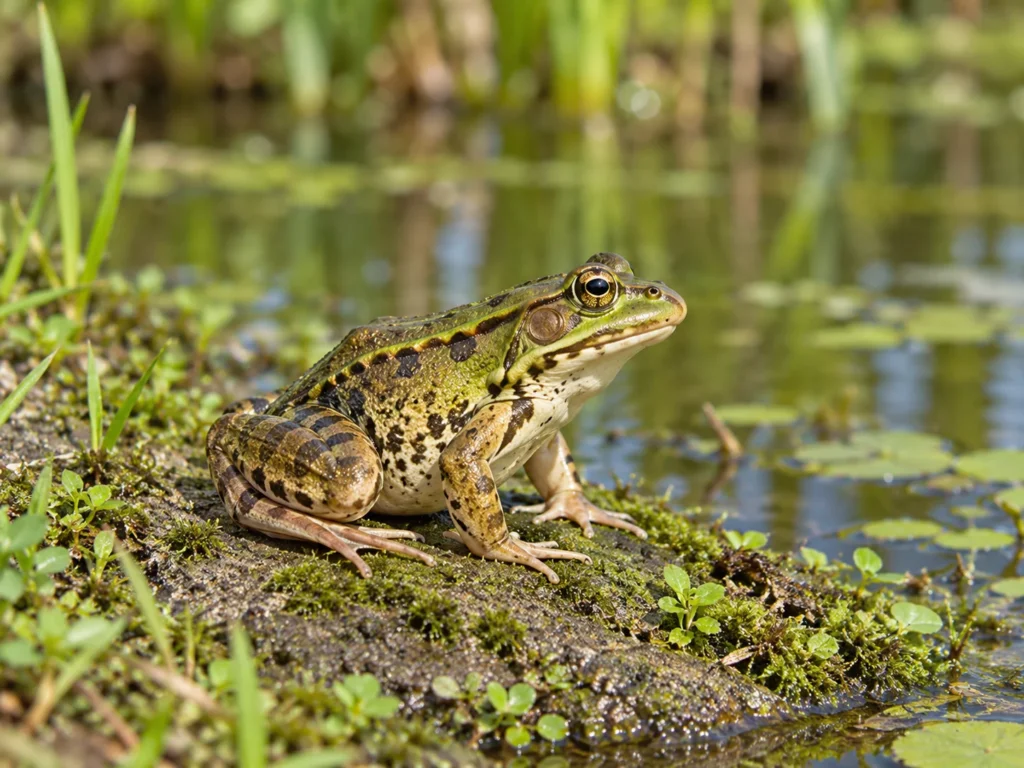
A frog looks wet even when it is not, because its skin is smooth, thin and kept damp. That skin does real work. A frog takes in a large share of its oxygen straight through it, which is why it has to stay moist, and why a frog drying out is a frog in trouble.
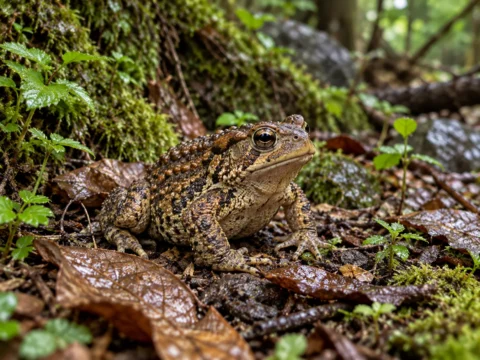
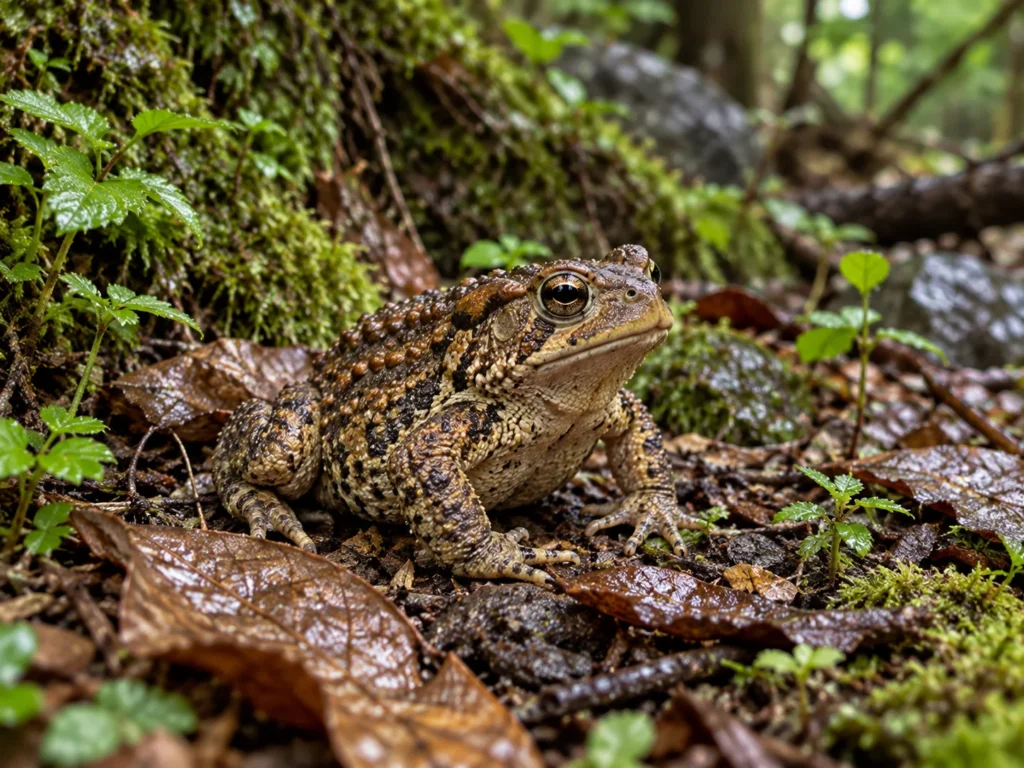
A toad looks dry and feels dry, and its skin is thicker and covered in raised bumps. That thicker skin loses far less water, which is the single reason a toad can spend its whole adult life in a hedge, a garden or a wood with no pond anywhere near. It trades breathing efficiency for freedom from water.
The bumps are not warts and you cannot catch anything from them. That story is as old as it is wrong.
Built to Leap, Built to Walk
Look at a resting frog from the side and its back legs are folded into a deep Z, packed with muscle and longer than its whole body. A frog escapes in one enormous jump, often straight into water, and some species clear more than twenty times their own length.
A toad’s back legs are short and sit low. Most toads walk, in an unhurried crawl, and manage only a modest hop when pushed. A toad does not need to outjump anything, because a toad has chemistry instead.
The Poison Behind the Eyes
Those two swellings behind a toad’s eyes are parotoid glands, and they hold a milky toxin the animal can release when something bites down on it. For a dog that picks up a cane toad it can be fatal, and even a common toad will leave a dog frothing and miserable. That defense is why a toad can afford to be slow.
Frogs are not all harmless either, and the poison dart frogs of Central and South America are among the most toxic animals alive. The difference is where the poison sits. A toad concentrates it in two obvious glands. A dart frog carries it across the whole skin and advertises it in red, gold and blue.
Clumps and Strings
If you find spawn in a pond in spring you can name the animal without ever seeing it. Frog spawn comes as a floating mass of jelly with a black dot in each bead, piled together near the surface. Toad spawn comes as long double strings wound around plant stems underwater, looking more like a necklace than a blob.
Both hatch into tadpoles and both tadpoles look much alike at first, though toad tadpoles are usually darker and tend to gather in large shoals. Both need water for this stage. A toad can live its adult life in a dry garden, but it still has to come back to a pond to breed, often to the exact pond it hatched in.
Every Toad Is a Frog
Here is the part that upends the question. Frog and toad are not two equal halves of anything. All of them, every single species, belong to the order Anura, which is what biologists mean by frogs. Toads are a group inside that, mostly the family Bufonidae, the true toads. So a toad is a kind of frog in the same way a poodle is a kind of dog.
Worse, the word toad gets used for any lumpy, dry-skinned frog regardless of family. The fire-bellied toad is not a true toad. The spadefoot toads are not either. What people are really naming is a lifestyle, the dry-skinned walking kind, and several unrelated branches of the frog family have arrived at it separately.