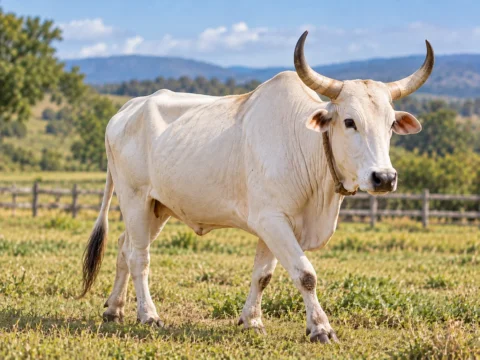
Meet the Sheep
A sheep can recognize about 50 individual sheep faces and remember them for two years. It can also learn human faces from photographs, and pick out a familiar person it has not seen in months.
So the word sheepish, and the idea that sheep are stupid, turn out to be badly unfair. Sheep are not unintelligent. They are nervous, and a nervous prey animal that sticks with the group behaves in ways that look mindless from outside.
They were also among the very first animals people ever domesticated, around 11,000 years ago, and there are over a billion of them today.
Scientific Name and Classification
The domestic sheep’s scientific name is Ovis aries.
- Kingdom: Animalia
- Phylum: Chordata
- Class: Mammalia
- Order: Artiodactyla
- Family: Bovidae
- Genus: Ovis
- Species: Ovis aries
Being in the family Bovidae makes sheep relatives of cattle, goats and antelope: horned, hoofed animals that chew the cud.
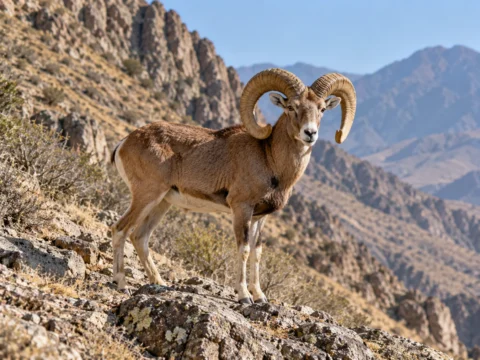
Domestic sheep descend from the wild mouflon of western Asia. There are over 1,000 breeds, selected for wool, meat, milk or hardiness.
Are Sheep Really Stupid?
No, and the research is fairly emphatic about it.
- Faces. Sheep remember around 50 individual sheep faces for two years or more, and recognize familiar humans. In one study they learned to identify photographs of specific people, including faces they were shown from new angles.
- Learning. Sheep have been trained through mazes and learn routes quickly, and they remember where good grazing was from previous seasons.
- Emotion. Sheep show measurable stress when separated from flockmates, and calm down when shown a photograph of a familiar sheep’s face. They have moods that respond to how they are kept.
- Problem solving. Welsh sheep have been filmed rolling across cattle grids on their backs to reach village gardens, which is not the behavior of a simple animal.
What makes them look foolish is flocking. A sheep that follows the group without hesitating is a sheep that survives wolves, and that instinct is strong enough to override almost everything else. It is a successful strategy, not an absence of thought.
Appearance and Anatomy
Sheep stand 2 to 4 feet at the shoulder and weigh 100 to 350 pounds, varying hugely with breed. Rams are larger than ewes.
- Pupils. Horizontal rectangles rather than circles. They give a field of view of around 270 to 320 degrees, so a grazing sheep can see behind itself without lifting its head, and the pupils rotate to stay level with the ground as the head tilts.
- Fleece. Wool that never stops growing in most breeds, which is why domestic sheep need shearing. Wild sheep shed naturally.
- Teeth. No upper front teeth. A sheep presses grass against a hard dental pad and tears it.
- Stomach. Four chambers, fermenting grass with the help of microbes.
- Hooves. Cloven, giving grip on rough hillside.
That never-ending fleece is entirely our doing. A sheep in New Zealand called Shrek evaded shearing for six years and was carrying around 60 pounds of wool when finally caught.
Habitat and Range
Domestic sheep live on every continent except Antarctica, wherever there is grass. China, Australia, India and parts of Africa hold the largest flocks.
They handle land that suits almost nothing else: steep hillsides, thin soil, uplands too poor and exposed for crops or cattle. That is precisely why they matter to farming in mountainous countries.
New Zealand is the famous case, with sheep long outnumbering people several times over.
Diet and Feeding
Sheep are herbivores and grazers, eating grass, clover, herbs and other low plants.
They graze closer to the ground than cattle and are more selective, picking out the most nutritious shoots, which is why sheep and cattle grazed together use a pasture better than either alone.
As ruminants they chew the cud, bringing food back up to grind it again, and a sheep spends several hours a day doing it.
They can get most of their water from grass when it is lush, and some desert breeds need remarkably little.
Behavior and Lifestyle
Sheep are intensely social and become distressed alone, which is why keeping a single sheep is considered poor practice.
They follow each other, and a flock will move as one. Shepherds and sheepdogs work with that instinct rather than against it.
Rams establish rank by charging head to head, and the thickened skull and curling horns are built for exactly that impact.
They are prey animals through and through: they startle easily, prefer to move uphill and into open ground when frightened, and dislike being driven into dark or narrow spaces.
Sheep bleat to keep in contact, and ewes and lambs recognize each other’s voices among hundreds of others.
Reproduction and Life Cycle
Pregnancy lasts about 147 days, roughly five months, and produces one to three lambs. Twins are common in many breeds.
Lambs stand and suckle within an hour and can follow the flock the same day.
A ewe learns her lamb’s voice and smell within hours and will refuse to feed another’s, which is why orphan lambs need fostering tricks or hand-rearing.
Most breeds are seasonal, mating in the fall so lambs arrive in spring when grass is growing.
Sheep live 10 to 12 years, sometimes longer, though farm sheep rarely reach that.
Predators and Threats
Wolves, coyotes, foxes, dogs, eagles and big cats all take sheep, and lambs are vulnerable to much more. Domestic dogs cause a great deal of sheep loss worldwide.
That conflict runs the other way too, and it matters for wildlife: predators are shot and poisoned to protect flocks, and sheep farming is one of the main reasons wolves and other large carnivores were eradicated across much of Europe and North America.
Sheep themselves face disease, parasites, flystrike and the simple danger of rolling onto their backs, which a heavily fleeced sheep often cannot recover from without help.
Conservation Status
Domestic sheep are farm animals and are not assessed by the IUCN. With over a billion of them they are among the most numerous large mammals on Earth.
Two genuine concerns sit alongside that. Traditional and rare breeds are disappearing as farming concentrates on a few commercial lines, and each lost breed takes its particular hardiness or wool quality with it.
And several wild sheep are threatened, including the argali of central Asia and the urial, pressured by hunting and competition with domestic flocks for grazing.
Role in the Ecosystem
Grazing sheep shape landscapes, and whether that is good depends entirely on how many there are.
At the right density they maintain grassland and chalk downland that many wildflowers, butterflies and ground-nesting birds depend on. Several rare European habitats exist only because sheep have grazed them for centuries, and they disappear if grazing stops.
Overgraze the same land and the result is the opposite: bare soil, erosion, no tree regeneration and hillsides stripped of everything but a short turf. Much of upland Britain looks the way it does for this reason.
Their importance to people is hard to overstate. Wool, meat, milk, cheese and parchment have come from sheep for thousands of years, and the ability to make a living from steep, poor ground is why upland communities exist at all.