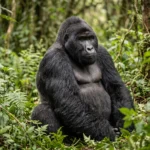
Meet the Chimpanzee
Chimpanzees and bonobos are the closest living relatives we have, sharing around 98 percent of our DNA.
That closeness shows in behavior more than in looks. Chimpanzees make and use tools, hunt in coordinated groups, form political alliances, comfort each other after fights, teach their young, and go to war with neighboring communities. They also recognize themselves in mirrors and appear to grieve.
Different chimpanzee communities have different customs, learned and passed on, which is about as close to culture as any animal gets.
Scientific Name and Classification
The chimpanzee’s scientific name is Pan troglodytes. Its only close relative is the bonobo, Pan paniscus.
- Kingdom: Animalia
- Phylum: Chordata
- Class: Mammalia
- Order: Primates
- Family: Hominidae
- Genus: Pan
- Species: Pan troglodytes
Four subspecies are recognized, spread across west and central Africa: the central, eastern, western and Nigeria-Cameroon chimpanzee.
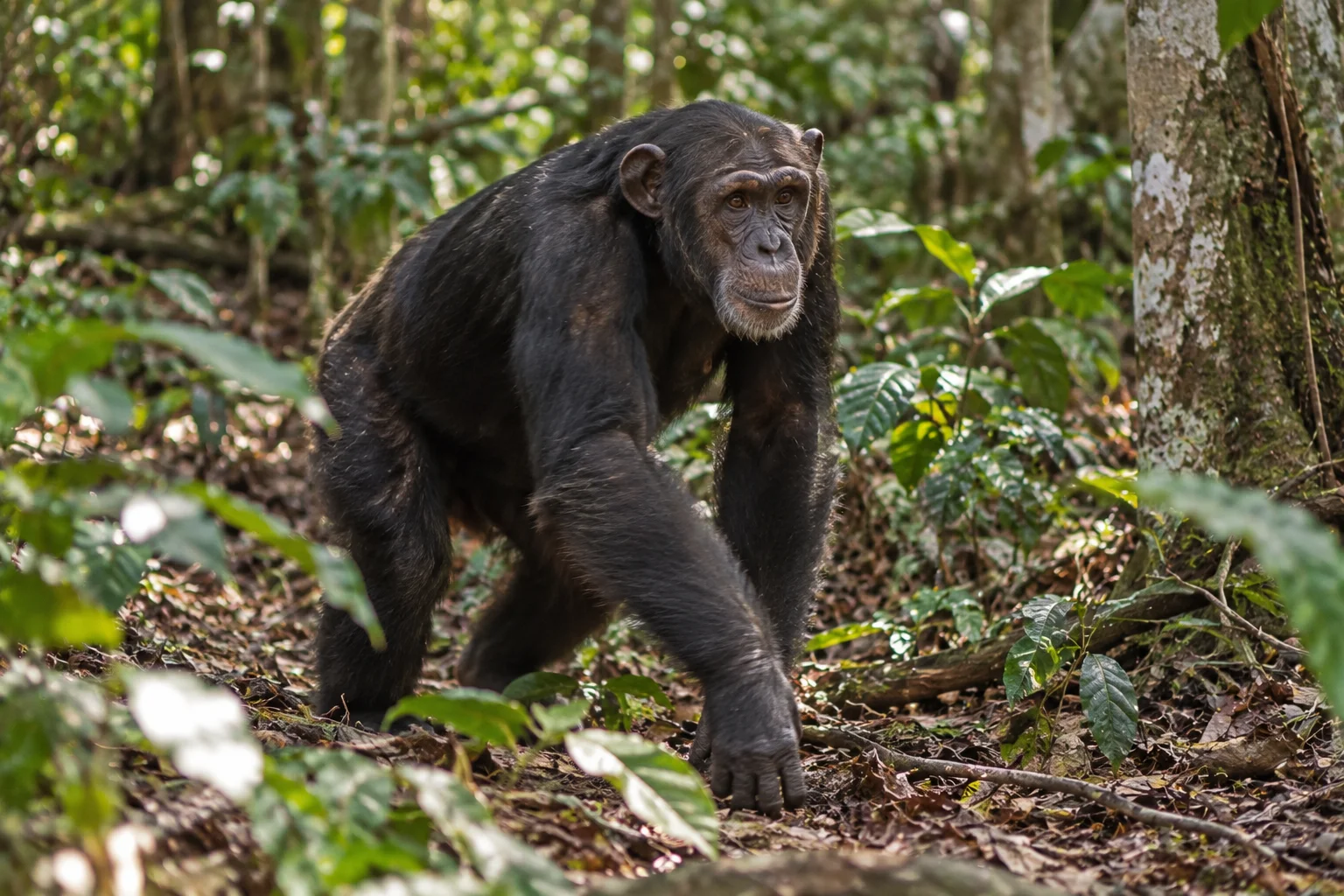
Chimpanzees are apes, not monkeys: no tail, broad chest, and shoulders that rotate fully for swinging.
Difference Between Chimpanzee and Bonobo
The two species look so alike that bonobos were not recognized as separate until 1929. They behave very differently indeed.
| Chimpanzee | Bonobo | |
|---|---|---|
| Where | West and central Africa | Only south of the Congo River |
| Who leads | Males | Females |
| Conflict | Can be severe, including lethal raids | Defused with grooming and affection |
| Hunting | Regular, coordinated | Rare |
| Build | Stockier, heavier | Slimmer, longer legs |
Both are equally related to humans. One resolves tension with violence and one with affection, which is a genuinely uncomfortable thing to sit with when thinking about our own species.
Appearance and Anatomy
Chimpanzees stand about 3 to 4.5 feet tall and weigh 60 to 130 pounds, with males noticeably larger than females.
- Arms. Longer than the legs, with a span of around 5 feet on a 4-foot body, for swinging and climbing.
- Hands and feet. Opposable thumbs, and opposable big toes as well, so a chimpanzee can grip with all four limbs.
- Face. Bare and highly expressive. Chimpanzees have a wide repertoire of recognizable expressions, and the open-mouth “play face” is their equivalent of laughter.
- Brain. About a third the size of ours, but built on much the same plan.
- Strength. Roughly one and a half times a human’s for the same body weight, largely because their muscle fibers are built for power rather than endurance.
Infants are born with a white tuft of hair on the rump, which signals to adults that they are young and should be tolerated. It disappears as they grow up.
Habitat and Range
Chimpanzees live across west and central Africa, in about 21 countries from Senegal to Tanzania.
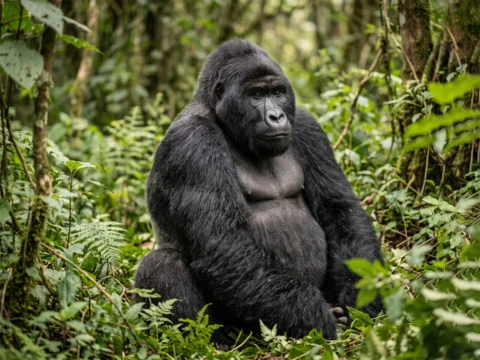
They are more adaptable than gorillas, using rainforest, woodland, swamp forest and dry savanna. Some populations in Senegal live in very open country and shelter in caves during the hottest part of the day.
Communities defend a territory that can run from a few square miles to over fifty, depending on how much food it holds.
Diet and Feeding
Chimpanzees are omnivores. Fruit is the staple, with leaves, seeds, bark, flowers, honey, insects and eggs filling out the diet.
They also hunt, and they do it together. Groups of males corner monkeys in the canopy, with individuals taking different roles: blockers, drivers and an ambusher. The meat is then shared, and who gets a share depends on alliances rather than who made the kill.
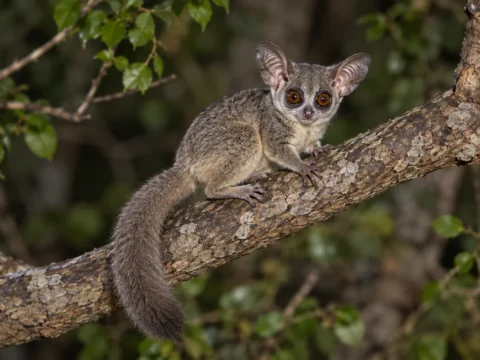
Tool use is where chimpanzees are extraordinary. They strip leaves from twigs to fish termites out of mounds, crack nuts open with stone hammers on stone anvils, chew leaves into sponges to soak drinking water out of hollows, and in Senegal have been seen sharpening sticks to jab at bushbabies sleeping in tree holes.
Crucially, these are local traditions. One community cracks nuts and a neighboring one does not, even with the same nuts and stones available. The skills are learned by watching, and young chimps take years to master them.
Behavior and Lifestyle
Chimpanzees live in communities of 15 to 150 animals that split into smaller parties through the day and regroup later, an arrangement called fission-fusion.
Politics runs the community. An alpha male holds his position partly through strength and largely through alliances, and smaller males who cooperate can outrank bigger ones. Grooming is the currency, and chimpanzees reconcile after fights by grooming, touching and embracing.
They also wage war. Groups of males patrol territory borders in silence and attack individuals from neighboring communities, and these raids can kill. Long-term studies have documented one community wiping out another over several years. It is unsettling precisely because it resembles something human.
They are also capable of gentleness: adopting orphans, comforting distressed group members, and sitting quietly with the dying.
Every night each chimpanzee builds a fresh nest high in a tree.
Reproduction and Life Cycle
After a pregnancy of about 8 months, a female chimpanzee gives birth to a single infant, helpless and entirely dependent on her.
It clings to her chest for the first months, rides on her back afterward, and nurses for four to five years. Full independence takes longer still, and the bond with the mother often lasts for life.
Females give birth only every five or six years, so a chimpanzee may raise three or four young in a lifetime. That is why losing adults is so damaging to a population.
Chimpanzees live 35 to 45 years in the wild, and well past 60 in captivity.
Predators and Threats
Leopards are the main natural predator, and large snakes and eagles take infants. Chimpanzees mob predators, shouting and throwing branches.
Human pressures are far greater. Forest is cleared for timber, mining and farming; chimpanzees are hunted for bushmeat; infants are taken for the pet trade, which usually means killing the mother and often the group defending her; and snares set for other animals maim many.
Disease is a particular danger. Being so closely related to us, chimpanzees catch human respiratory infections easily, and outbreaks have killed whole study groups. Ebola has also devastated populations.
Conservation Status
Chimpanzees are Endangered, with numbers falling across almost all of their range.
Perhaps 170,000 to 300,000 remain, down from an estimated million or more a century ago. The western chimpanzee is Critically Endangered, having lost the great majority of its population in recent decades.
Sanctuaries across Africa care for orphans confiscated from the pet and bushmeat trades, though they cannot usually be returned to the wild. Protected areas with real enforcement work, and community programs that make living forest more valuable than cleared forest work better still.
Role in the Ecosystem
Chimpanzees are major seed dispersers. A fruit-heavy diet and a wide daily range mean they carry seeds well away from the parent tree, and some large-seeded forest trees depend on apes almost entirely to spread.
Their hunting keeps monkey numbers in check, which in turn affects how those monkeys feed and where.
And because they need large tracts of connected forest, protecting chimpanzees protects a great deal else at the same time.