The Tooth Test, and Why It Works
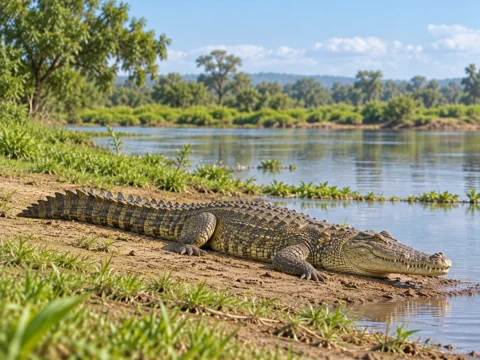
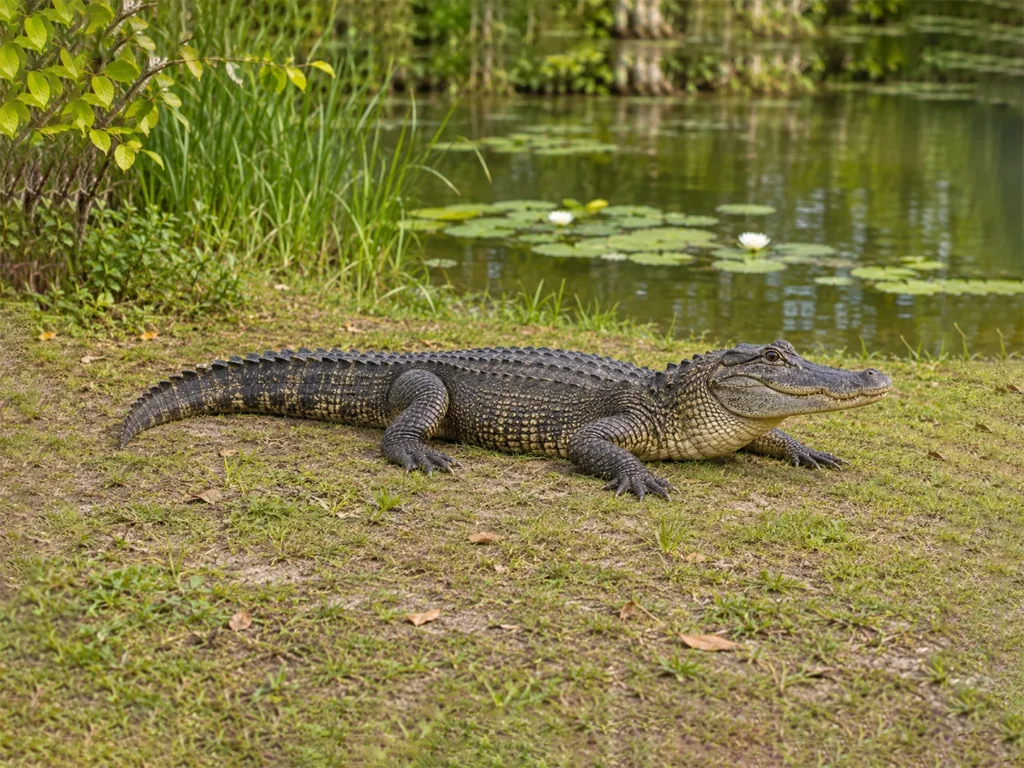
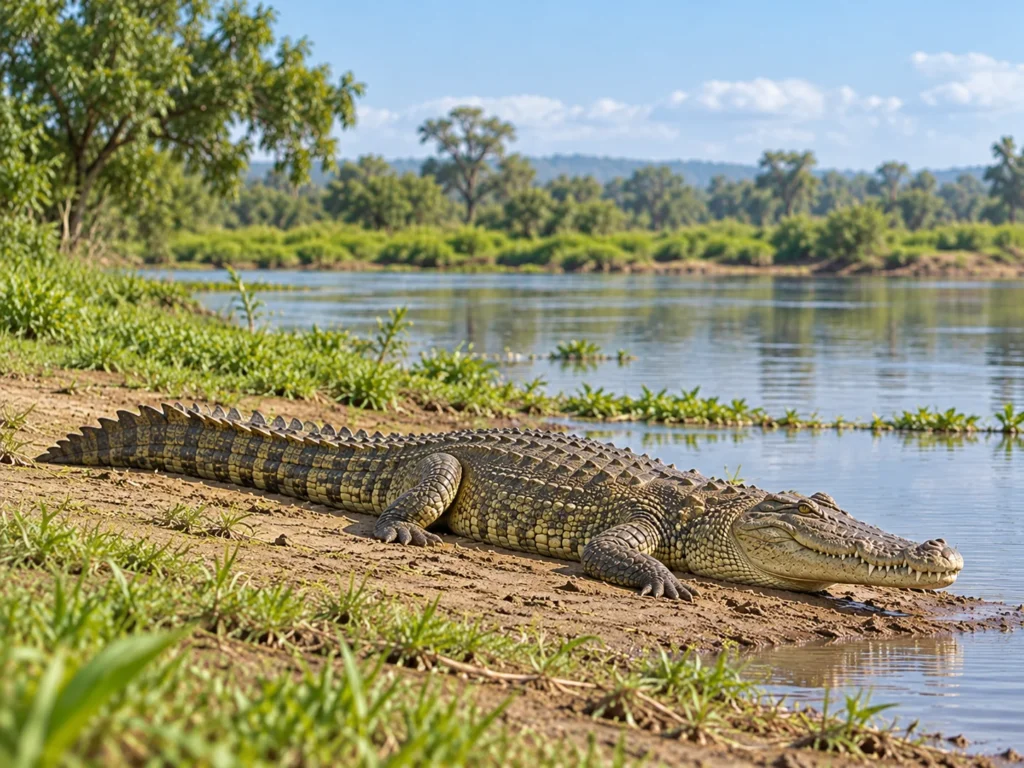
An alligator’s upper jaw is wider than its lower jaw. When the mouth closes, the top jaw comes down over the bottom like a lid on a box, and every lower tooth disappears inside it. A crocodile’s jaws are much closer to the same width, so the teeth interlock instead of tucking away, and the enlarged fourth tooth on each side of the lower jaw rides up outside the lip. On a crocodile with its mouth shut, you can count teeth. On an alligator, you cannot.
Snout shape is the other test people reach for, and it is less reliable than its reputation suggests. An alligator’s snout is broad and rounded, shaped like a U. A typical crocodile’s is narrower and more pointed, shaped like a V. But “typical” is doing a lot of work in that sentence, because the mugger crocodile of South Asia has a snout nearly as broad as any alligator’s. The teeth do not lie.
Why Alligators Stay in Fresh Water
This is the real difference between the two animals, and it is the one you cannot see from the bank. Crocodiles have working salt glands on the tongue, small structures that pump excess salt back out of the body. That is what allows a saltwater crocodile to swim between islands and turn up hundreds of miles out at sea.
Alligators have the same glands, but theirs do not work. An alligator can tolerate brackish water for a few hours or a few days, which is why one occasionally shows up in a coastal marsh, but it cannot live there. Fresh water is not an alligator’s preference. It is a requirement.
Where in the World You Find Each
There are only two species of alligator. The American alligator is spread across the southeastern United States and is doing well. The Chinese alligator holds on in a small stretch of the Yangtze, critically endangered, with only a few hundred left in the wild.
Crocodiles are a far larger family, roughly 14 to 16 species across Africa, Asia, Australia and the Americas. One place on Earth has both animals living wild side by side: southern Florida, where the American crocodile reaches the northern edge of its range and the American alligator reaches the southern edge of its own. If you want to see both in a single afternoon, that is where you go.
Which One Is More Dangerous
Crocodiles, though the honest answer depends on which crocodile. The Nile crocodile in Africa and the saltwater crocodile in Asia and Australia account for the large majority of fatal attacks on people. Both grow enormous, both live close to where people fish, wash and collect water, and both are willing to treat a person as prey.
Most crocodiles are nothing like that. The American crocodile, the one sharing Florida with the alligator, is a shy animal that almost nobody has trouble with. Alligator attacks do happen and occasionally kill, but they are rare, and they usually involve an animal that people have been feeding and that has lost its natural wariness.
The Ones That Are Neither
Two animals get dragged into this argument and belong in neither column. Caimans look like small alligators and sit in the alligator family, Alligatoridae, but they are not alligators. Most of them live in Central and South America, and the spectacled caiman is the one people meet most often.
The gharial is easier. Its snout is absurdly long and thin, built for sweeping sideways through water after fish, and the adult male grows a bulb on the end of it. Nothing else on Earth looks like a gharial.