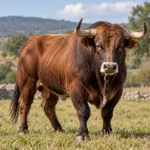

Meet the Cattle
Cattle are the animal behind a surprising number of English words. Cow, bull, ox, steer, heifer, calf and bullock all describe the same species, Bos taurus. The differences are age, sex, and what job the animal does.
There are more than 940 million cattle on Earth, and by some counts over a billion. They are the most widespread large domestic animal there is, kept for milk, meat, leather, and in much of the world still for pulling things.
Every one of them descends from the aurochs, a wild bovine that stood six feet at the shoulder and has been extinct since 1627.
Scientific Name and Classification
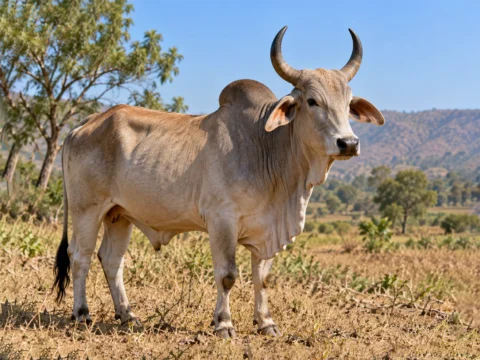
Cattle are Bos taurus. Humped zebu cattle from South Asia are often written as Bos indicus, and some authorities treat both as subspecies of the aurochs, Bos primigenius. Taxonomists have not fully settled it.
- Kingdom: Animalia
- Phylum: Chordata
- Class: Mammalia
- Order: Artiodactyla
- Family: Bovidae
- Genus: Bos
- Species: Bos taurus
Genetic work points to a remarkably small beginning. The world’s taurine cattle appear to descend from roughly 80 wild aurochs domesticated in southeastern Turkey about 10,500 years ago. A second, separate domestication in the Indus Valley produced zebu cattle a couple of thousand years later.
The aurochs itself survived in Europe until 1627, when the last known animal died in the Jaktorow Forest in Poland.
Cow, Bull, Ox and Steer: What Is the Difference?
These are not different animals. They are different words for cattle at different ages, sexes and jobs, and mixing them up is the single most common mistake people make.
| Word | What it means |
|---|---|
| Cow | An adult female that has had at least one calf |
| Heifer | A young female that has not yet had a calf |
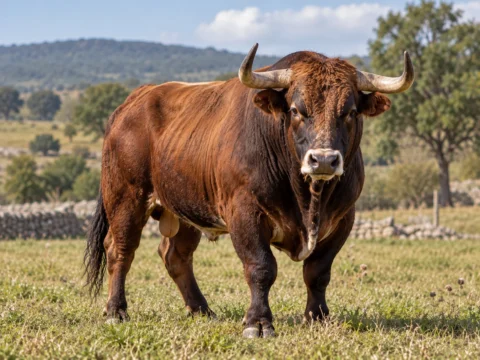
| Bull | An adult male that has not been castrated |
| Steer or bullock | A castrated male, usually raised for beef |
| Ox | A castrated male trained for work, usually at least four years old |
| Calf | A young animal of either sex |
Two things follow from this. “Cows” is not a correct word for a mixed herd, though almost everyone uses it that way. And a cow does not give milk simply because she is a cow: like any mammal, she produces milk after giving birth.
Appearance and Anatomy
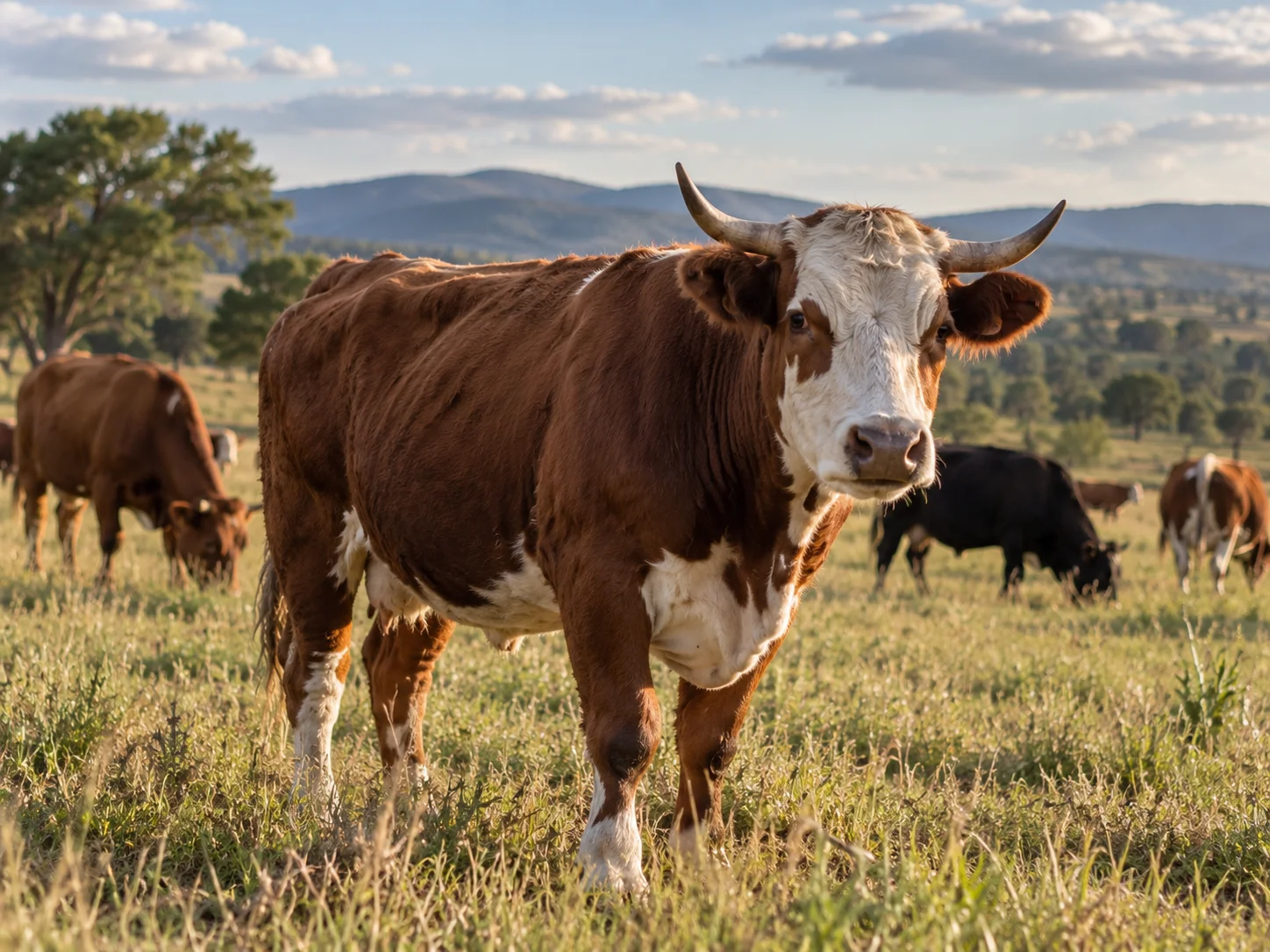
Cattle vary enormously by breed. A Hereford cow weighs around 1,300 to 1,800 pounds while the bull of the same breed reaches 2,200 to 2,600. Small breeds are far lighter, and the heaviest steer on record weighed about 4,720 pounds.
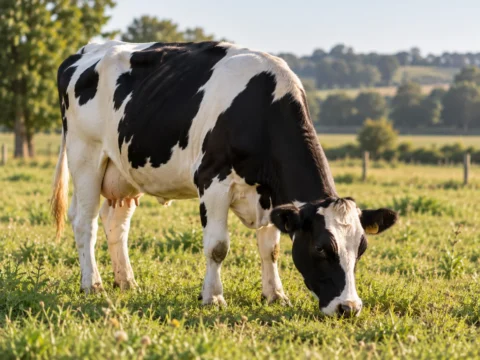
Most stand 4 to 6 feet at the shoulder. Coat colors are usually black, white, red or brown, often in patches.
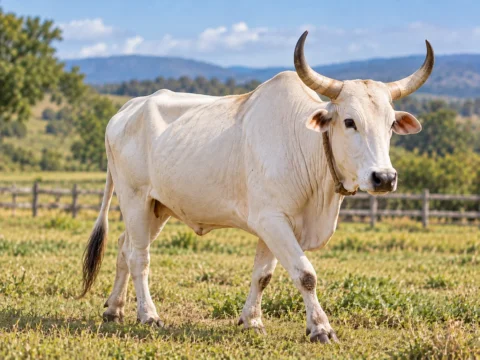
- Horns. Permanent, unbranched, and grown by both sexes in horned breeds. Unlike a deer‘s antlers, horns are never shed. Many modern breeds are polled, meaning naturally hornless.
- Stomach. Four chambers: rumen, reticulum, omasum and abomasum. The rumen is a fermentation vat holding up to 50 gallons.
- Teeth. No upper front teeth at all. Cattle press grass against a hard dental pad and tear it, which is why grazed pasture looks ragged.
- Eyes. Set wide, giving nearly 360-degree vision with a small blind spot directly behind.
- Hooves. Cloven, with two main toes.
Habitat and Range
Cattle live on every continent except Antarctica, wherever people have taken them. India has the largest national herd, followed by Brazil, China and the United States.
Breeds have been shaped to fit their conditions. Zebu cattle carry a shoulder hump and loose skin that help them shed heat in the tropics. Highland cattle grow a shaggy double coat for Scottish winters. Dairy breeds like the Holstein were developed for milk yield on rich pasture.
What they need everywhere is grass, water and space. Grazing land now covers roughly a quarter of the planet’s ice-free land surface, which is part of why cattle matter environmentally as well as agriculturally.
Diet and Feeding
Cattle are herbivores and ruminants, which means they can live on grass, a food most animals cannot digest at all.
The trick is in the rumen. Grass is swallowed quickly, then fermented by billions of microbes that break down cellulose. The animal later brings the softened material back up as cud and chews it properly before swallowing it on through the other three chambers. A cow spends around eight hours a day chewing cud, and may make 40,000 jaw movements doing it.
Strictly speaking, cattle do not digest grass. Their microbes do, and the animal digests the microbes.
An adult eats 2 to 3 percent of its body weight in dry feed daily and drinks 30 to 50 gallons of water.
Behavior and Lifestyle
Cattle are herd animals with a clear social order, and they form real preferences. Given the choice, individual cattle graze and rest beside particular companions, and separating bonded animals raises their stress measurably.
They are brighter than their reputation. Cattle learn to operate gates and feeders, remember locations for years, recognize dozens of individual faces, and show measurable excitement when they solve a problem.
Most of the day goes on eating and ruminating, with cattle grazing for around eight hours and lying down to chew for another eight. They sleep very little, usually under four hours, and mostly in short naps.
Do Bulls Hate the Color Red?
No. This is one of the most widely believed animal myths there is, and it is wrong twice over.
Cattle are red-green colorblind. They cannot pick out red as a distinct color at all, so a red cloth does not look red to a bull.
What provokes a charge is movement, and the threat the person waving the cloth represents. In bullfighting two capes are used, a magenta one early on and the red muleta later, and the bull responds identically to both. The red is for the audience, and because it hides blood.
Bulls genuinely are dangerous, and farm bulls injure people every year. Just not because of the color of anybody’s shirt.
Reproduction and Life Cycle
A cow is pregnant for about 283 days, close to nine months, and almost always gives birth to a single calf. Twins happen in a small percentage of births.
A calf weighs 60 to 100 pounds at birth and is standing and nursing within an hour or two. Cows seek out a quiet, hidden spot to calve if they are allowed to.
Heifers usually have their first calf at two to three years old. A dairy cow must calve to produce milk, which is why dairy herds are bred on a yearly cycle.
Cattle can live 20 to 25 years, and the oldest recorded cow reached 48. Few get the chance: beef cattle are typically slaughtered around 18 months and dairy cows at about five years.
Predators and Threats
Wolves, bears, big cats and coyotes take cattle where their ranges overlap, mostly calves. An adult bull is a formidable animal and herds close ranks around the young when threatened.
In practice the serious threats are disease, drought and heat. Foot-and-mouth disease and bovine tuberculosis can force mass culls, and rising temperatures cut both milk yield and fertility.
Conservation Status
Cattle are a domestic animal and are not assessed by the IUCN. With over 940 million of them, the species is in no danger at all.
Two related concerns are real, though. Many traditional local breeds are disappearing as farms worldwide switch to a handful of high-yield commercial breeds, and that narrows the genetic variety available for the future. And their wild ancestor is gone: the aurochs was hunted and squeezed out of its habitat until the last one died in 1627.
Role in the Ecosystem
Grazing animals have shaped grasslands for millions of years, and cattle now fill the role that wild herds once did across much of the world. Well-managed grazing keeps grassland open, stops scrub taking over, and supports the birds and insects that depend on short turf.
Their dung feeds an entire community of beetles and flies, which in turn feed birds, and it returns nutrients to the soil.
The other side is well known. Rumen fermentation produces methane, a potent greenhouse gas, and cattle are the largest agricultural source of it. Grazing land and feed crops also drive deforestation in some regions. Both things are true at once: cattle can maintain healthy grassland, and the scale at which we keep them carries a serious environmental cost.