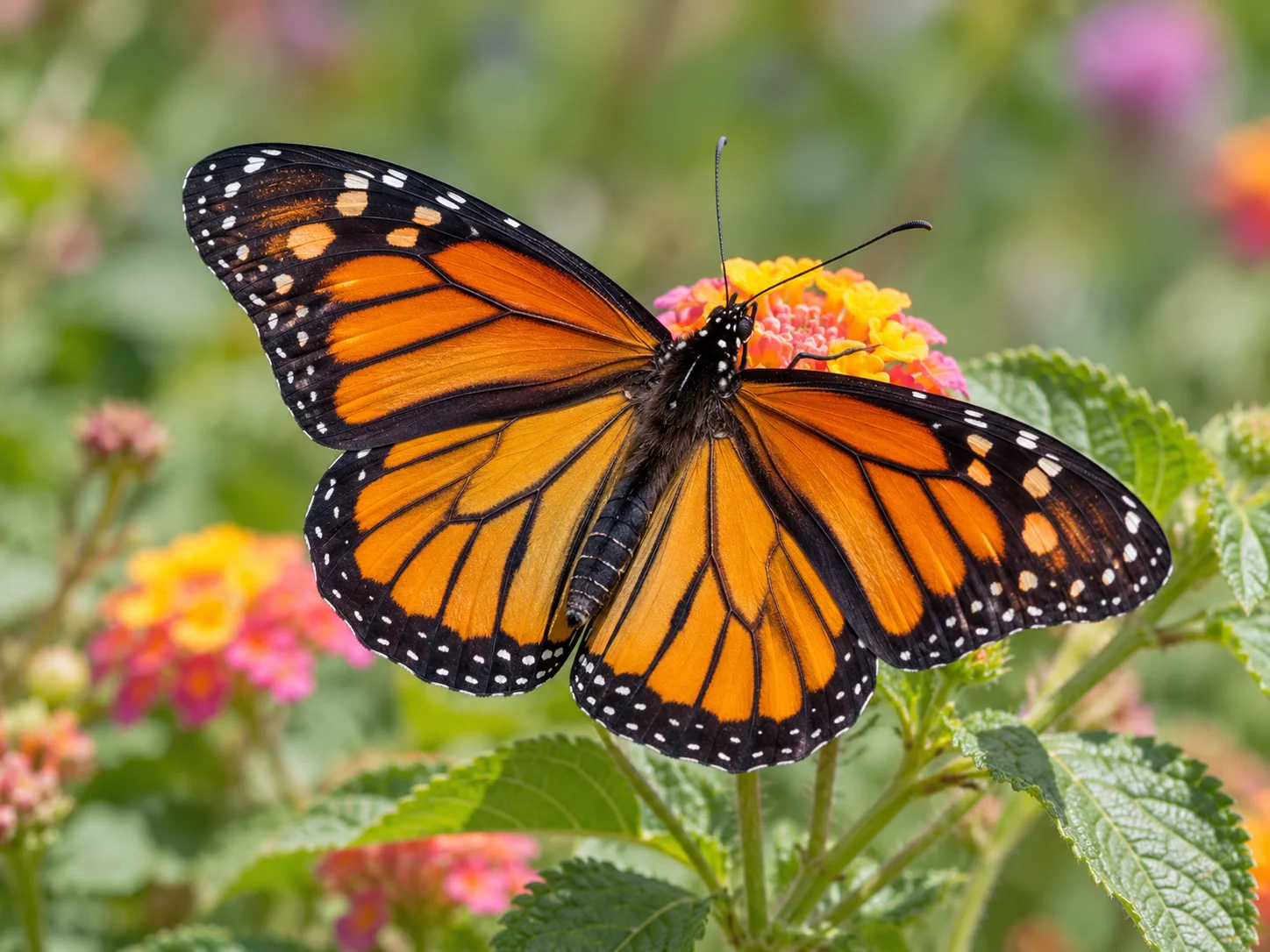
Meet the Butterfly
A butterfly begins life as an egg the size of a pinhead, becomes an eating machine with no wings, then dissolves almost completely inside a hard case and rebuilds itself into a flying insect. It is one of the strangest things any animal does, and it happens in gardens everywhere.
“Butterfly” covers roughly 18,000 to 20,000 species, found on every continent except Antarctica. They range from the western pygmy blue, barely an eighth of an inch across, to the Queen Alexandra’s birdwing, which spans nearly a foot.
They are also doing something useful while they look beautiful. Butterflies pollinate as they feed, and because they react quickly to changes in habitat and climate, scientists watch them as an early warning system for the health of a landscape.
Scientific Name and Classification
Butterflies are a large group rather than a single species, so there is no one two-word scientific name for them. They form a clade called Rhopalocera inside the order Lepidoptera, which also holds the moths.
- Kingdom: Animalia
- Phylum: Arthropoda
- Class: Insecta
- Order: Lepidoptera
- Clade: Rhopalocera (butterflies)
Lepidoptera means “scale wing” in Greek, and that is the family trait. Butterfly and moth wings are covered in thousands of microscopic scales, overlapping like roof tiles, and those scales carry the color.
The species count is genuinely unsettled. Careful tallies land around 18,500, while other sources quote 20,000 or more. New species are still being described, and Colombia alone holds over 3,600 of them.
Difference Between Butterfly and Moth
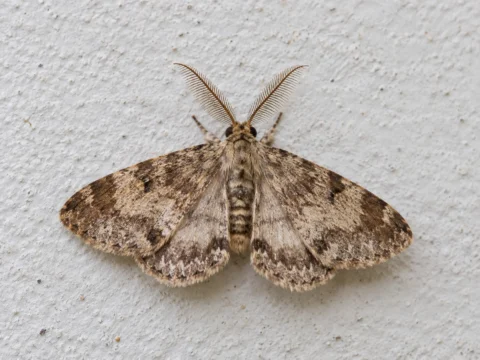
Butterflies and moths are close relatives in the same order, and there is no single rule that separates them perfectly. These are the useful signs.
| Butterfly | Moth | |
|---|---|---|
| Antennae | Thin, with a small club or knob at the tip | Feathery or thread-like, no club |
| Resting wings | Usually held closed above the back | Usually spread flat or folded like a tent |
| Active | Mostly daytime | Mostly night |
| Pupa | A bare hard case called a chrysalis | Usually a silk cocoon |
| Body | Slim and smooth | Stouter and furrier |
Every one of these has exceptions. Some moths fly by day and are brilliantly colored, and a few butterflies are drab. If you want one test, look at the antennae.
Appearance and Anatomy
Wingspans run from about 0.5 inch to 12 inches, and weights from a few hundredths of a gram to around half a gram. Even the largest butterfly weighs less than a paperclip.
Like all insects, a butterfly has three body parts, six legs and a skeleton on the outside. The details are where it gets interesting.
- Wings. Four of them, covered in tiny scales. Some colors come from pigment; the metallic blues and greens come from the scales bending light, which is why those shades shift as the butterfly turns.
- Proboscis. A long tube kept coiled like a watch spring under the head, unrolled to reach into flowers.
- Feet. Butterflies taste with them. A female lands on a leaf and her feet tell her whether it is the right plant for her caterpillars.
- Eyes. Compound, built from thousands of units, and able to see ultraviolet light that humans cannot, which makes many flowers look quite different to them.
- Antennae. Clubbed at the tip, used for smell and balance.
Habitat and Range
Butterflies live on every continent except Antarctica, in rainforest, grassland, desert, farmland, mountains and city gardens. A few hardy species reach the edge of the Arctic.
Tropical forest holds by far the most species. Colombia tops the list with more than 3,600, while the whole United States has around 750.
What really decides where a butterfly lives is not climate but plants. Each species lays eggs on a particular host plant, sometimes only one kind. Monarch caterpillars eat milkweed and nothing else. Remove the host plant and the butterfly disappears, however pleasant the weather.
Diet and Feeding
Butterflies eat completely different food at different stages of life, which is the whole point of the design.
Caterpillars eat leaves, and almost nothing else. They are built to consume and grow, shedding their skin several times as they outgrow it, and a caterpillar can increase its body weight thousands of times before it pupates.
Adults drink liquids through the proboscis. Nectar is the usual food, but plenty of species prefer rotting fruit, tree sap, or the fluids from dung and carrion. Many gather at wet mud or puddles to take up salts and minerals, a habit called puddling, and it is usually males doing it.
So the caterpillar competes with grazing animals and the adult competes with bees. The same creature occupies two entirely different places in the food web.
Behavior and Lifestyle
Butterflies are cold-blooded, and that governs their day. Most cannot fly properly until their flight muscles reach around 86°F (30°C), so mornings begin with basking: wings spread flat to the sun like solar panels until the engine is warm enough.
Flight is slower than it looks, usually under 12 miles an hour, and the fluttering path is partly a defense. An insect that does not travel in a straight line is harder for a bird to catch.
Some species migrate, and nearly 600 are now known to make migratory movements. The famous one is the monarch, which travels around 2,000 miles from the Great Lakes to central Mexico, covering up to 50 miles on a good day. No individual completes the round trip. It takes several generations, and the butterflies that fly south have never been there before.
Reproduction and Life Cycle
The butterfly life cycle has four stages, and the change is called complete metamorphosis.
- Egg. Glued to the underside of a chosen host plant. A female may lay 100 to 300 or more.
- Caterpillar (larva). Hatches and eats, growing fast and shedding its skin several times.
- Chrysalis (pupa). The caterpillar attaches itself, sheds its skin one last time, and hardens into a case. Inside, most of the caterpillar’s body breaks down and is rebuilt.
- Adult. Emerges with crumpled wings, pumps fluid into them, waits for them to harden, and flies.
Adult lifespan varies far more than most people expect. Some species live about a week. The brimstone butterfly survives nine to ten months, and the migrating monarch generation lives eight months or more, spending much of the winter clustered in Mexican forests.
Predators and Threats
Nearly everything eats butterflies. Birds, lizards, frogs, toads, spiders, dragonflies, wasps and monkeys all take adults or caterpillars, and parasitic wasps lay eggs inside caterpillars.
The defenses are inventive. Many caterpillars are camouflaged as twigs or bird droppings. Some butterflies carry poisons taken from their host plants and advertise it with bright warning colors, and harmless species copy those colors to borrow the protection. Eyespots on the wings make a small insect look like something with a face, and wings that are bright above and dull beneath let a butterfly vanish the moment it lands and closes up.
Human pressures are heavier than any predator: habitat loss, pesticides, herbicides that remove host plants like milkweed, and a changing climate that pushes butterflies out of step with the plants they depend on.
Conservation Status
There is no single conservation status for butterflies, because the group holds many thousands of species.
Plenty of common garden species are in no trouble at all. Others are among the most threatened insects on Earth, particularly those tied to one rare host plant or a small patch of forest.
The broader picture is the worrying one. Insect numbers are falling across much of the world, and because butterflies are well studied and easy to count, they are often where that decline is measured first. The migratory monarch has become the symbol of it, with the overwintering colonies in Mexico and California far smaller than they were a few decades ago.
Butterflies respond quickly to habitat work, which is the encouraging part. Planting the right host plants and cutting pesticide use brings them back faster than almost any other wildlife.
Role in the Ecosystem
Butterflies pollinate while they feed. They are less efficient than bees, because they carry pollen on their long legs rather than on a furry body, but they travel further between plants, which moves pollen across greater distances.
They are also food. Caterpillars in particular are a staple for nesting birds, and many songbirds cannot raise a brood without large numbers of them.
Their third job is to act as an indicator. Butterflies are sensitive to temperature, habitat quality and pesticides, and they respond within a season or two. When butterfly numbers fall in a place, it is usually a sign that something broader is going wrong, which is why conservationists count them so carefully.