Start With the Tail
Farmers settle this in a second from the far side of a field. A goat’s tail is short and carried up, often flicking. A sheep’s tail hangs down, and on most farmed sheep it has been docked short, but short or long it still points at the ground.
It works because the two animals have genuinely different tail muscles, not because of any habit you could train away. Use it first, then check the other signs to confirm.
Browsers and Grazers
A sheep is a grazer. Its natural posture is head down, working steadily through grass, and a flock will crop a pasture evenly and low. Give sheep a field and they will eat the field.
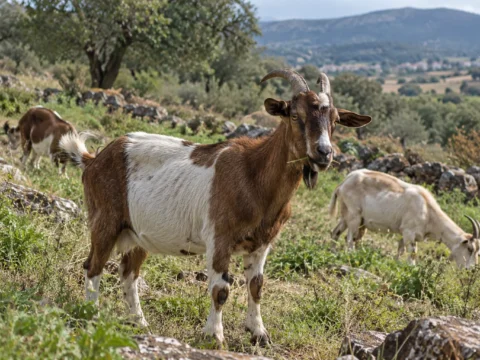
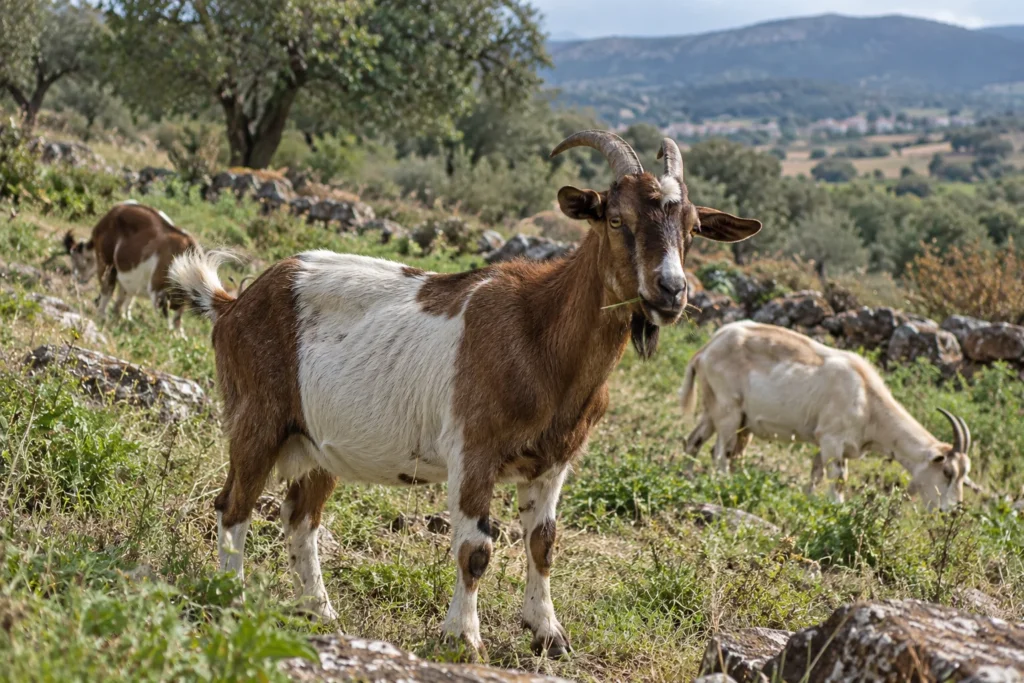
A goat is a browser, which means it prefers leaves, twigs, bark and anything growing at head height or above. Goats stand on their back legs to reach branches, climb walls and rocks to get at what is growing there, and will strip a hedge that sheep would ignore. This is also why goats are so destructive where they have been introduced to islands, and why they are useful for clearing scrub that nothing else will touch.
The myth that a goat will eat a tin can is just that. Goats investigate everything with their lips, which looks like eating and usually is not.
Wool, Hair and the Work of Shearing
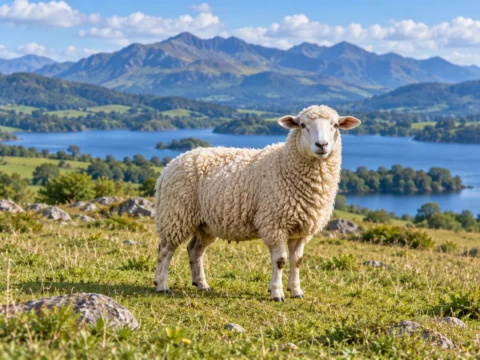
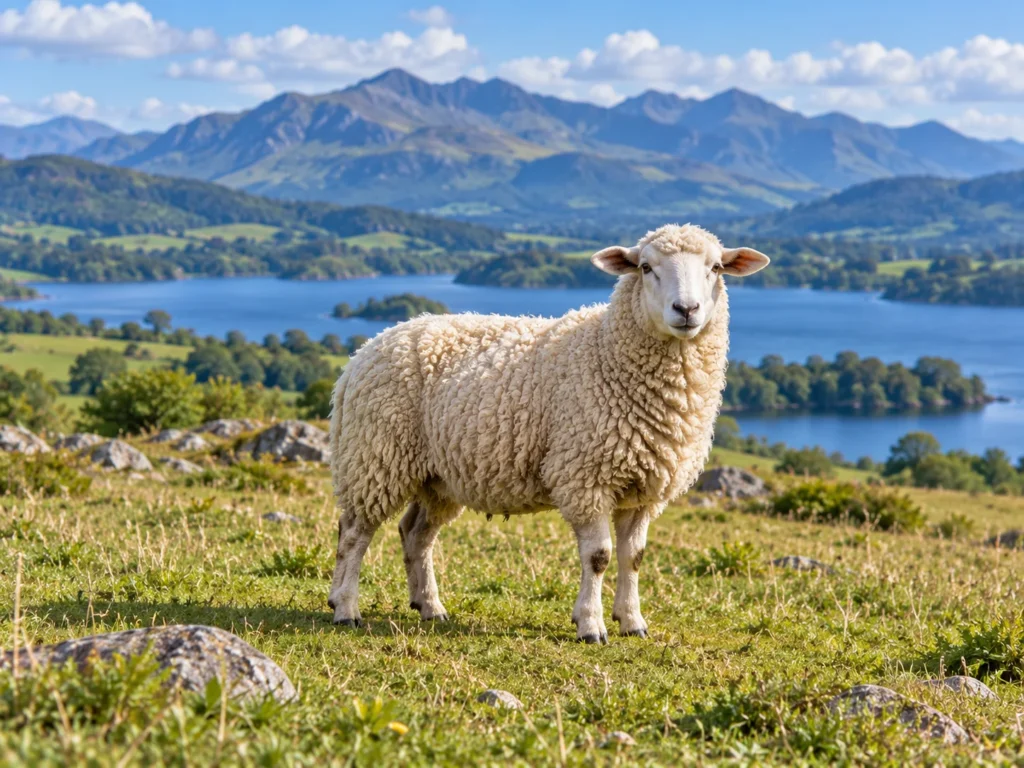
Sheep grow wool, a fiber that keeps growing and does not shed, which is why a domestic sheep has to be sheared every year. An unsheared sheep can end up carrying a fleece heavy enough to stop it standing up, and a few famous escaped sheep have been found in exactly that state.
Most goats grow hair that sheds naturally and never needs shearing. The exceptions are the fiber breeds, the Angora that gives mohair and the Cashmere that gives the soft undercoat, and those are combed or clipped. A hair goat and a wool sheep standing side by side look entirely different in texture even at a distance.
Horns, Beards and Faces
Both sexes of most goat breeds grow horns, and goat horns are narrow, often ridged, and sweep up and back rather than curling. Many sheep breeds have no horns at all, and where they do appear they are usually on the ram and curl into a heavy spiral beside the head.
Beards are goats only. A tuft under the chin belongs to a goat of either sex and no sheep has one. The faces differ too, with goats carrying a straighter profile and sheep a more rounded, sometimes convex one, though that varies a lot by breed.
Two Animals, Two Temperaments
Sheep flock. Frightened sheep bunch tighter and move as one body, which is precisely what makes herding with a dog possible, since the dog is working with an instinct the sheep already has.
Goats scatter. A frightened goat runs for high ground or cover on its own account and will face a dog down rather than move for it. Goats are more independent, more curious and far better at escaping, which anyone who has tried to fence them learns quickly.
They are not as closely related as the farmyard suggests, either. Goats are Capra, sheep are Ovis, two separate genera, and a goat has 60 chromosomes to a sheep’s 54.