Meet the Giant Panda
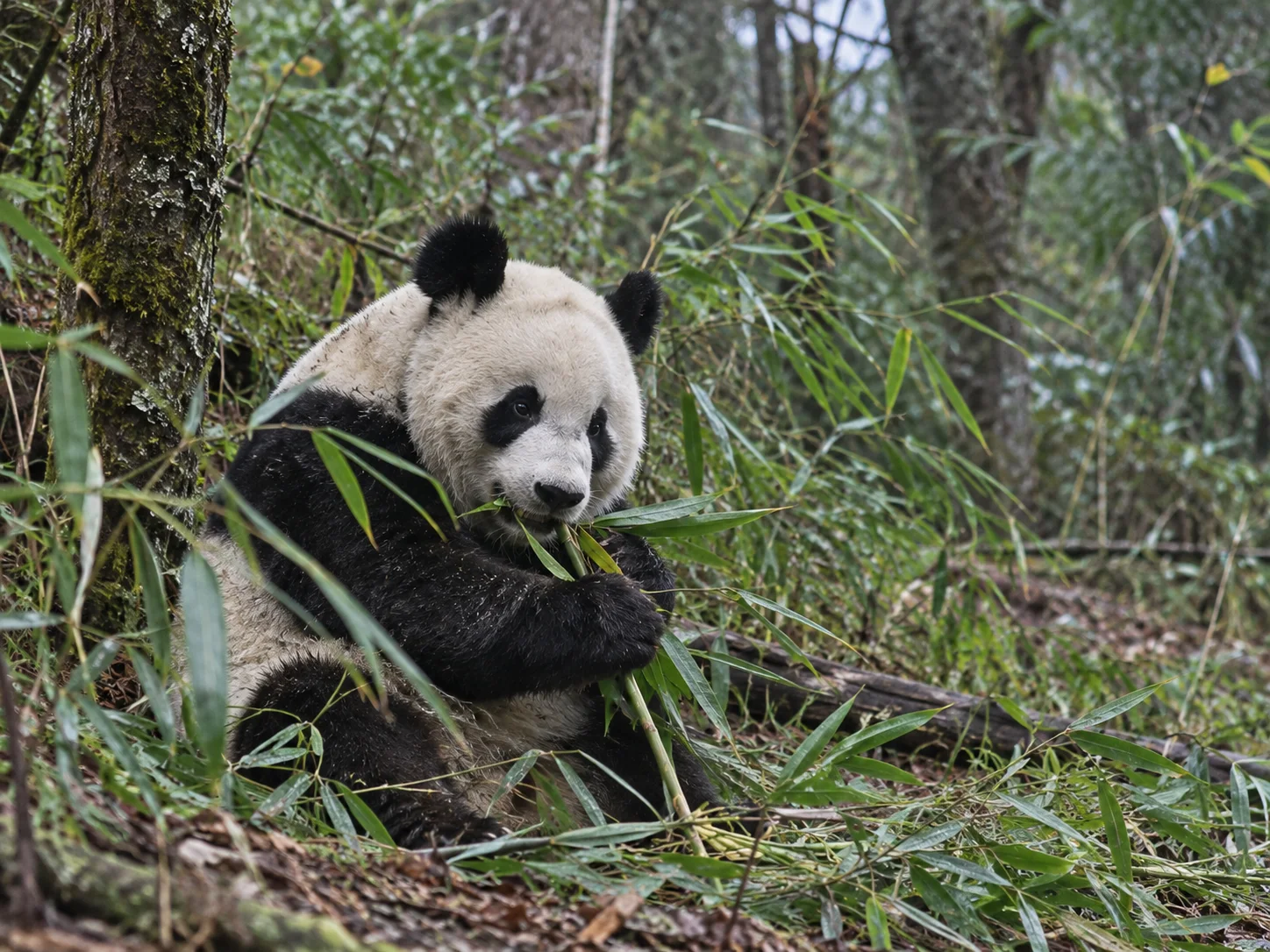
A giant panda is a bear with a meat-eater’s body that eats almost nothing but grass.
Bamboo makes up around 99 percent of its diet, and its digestive system is not built for it at all: a short, simple gut with none of the chambers a grazing animal uses. It gets through the day by eating staggering quantities and moving as little as possible.
Somewhere along the way it also lost the ability to taste meat.
Scientific Name and Classification
The giant panda’s scientific name is Ailuropoda melanoleuca, which means roughly “cat-footed black and white animal”.
- Kingdom: Animalia
- Phylum: Chordata
- Class: Mammalia
- Order: Carnivora
- Family: Ursidae
- Species: Ailuropoda melanoleuca
It is a genuine bear, in the family Ursidae, and the argument about that lasted over a century. Some scientists put it with the raccoons, some with the red panda, and genetics finally settled it: the giant panda is a bear, and an early branch of the bear family.
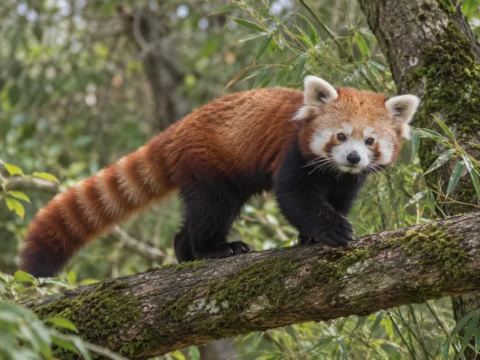
It is not closely related to the red panda at all. They share a name, a diet and a false thumb, and nothing else. The red panda had the name first.
Why Does a Carnivore Eat Bamboo?
This is the central oddity of the animal, and the answer is that it switched diet without switching body.
The panda belongs to the order Carnivora and has the digestive system to match: a short, simple gut designed to process meat quickly. It has none of the long fermentation chambers that cattle or deer use to break down tough plants, and it cannot digest cellulose properly.
So it extracts only around 17 percent of what it eats, and compensates by volume. An adult panda eats 20 to 40 pounds of bamboo a day, spends 10 to 16 hours a day feeding, and defecates up to 40 times a day because so much passes straight through.
Everything else about the animal follows from that shortfall. Pandas move slowly, avoid climbing when they can, do not defend large territories, and do not hibernate, because none of those things is affordable on a bamboo budget.
The strangest piece of evidence is in its genome. The panda carries a broken version of the gene for tasting umami, the savory flavor of meat, and it appears to have stopped working several million years ago. It is not just that pandas do not eat meat. They largely cannot taste it.
Appearance and Anatomy
Giant pandas measure 4 to 6 feet in body length and stand about 2 to 3 feet at the shoulder, weighing 155 to 265 pounds. Males are larger than females.
- False thumb. An enlarged wrist bone that works as a sixth digit, letting the panda grip a bamboo stem. The red panda evolved the same solution independently, which is one of the clearest examples of convergent evolution in mammals.
- Jaws and teeth. Enormous jaw muscles anchored to a broad skull, with molars several times the size of a leopard‘s, for crushing woody stems.
- Gut lining. Coated in thick mucus that protects it from bamboo splinters.
- Coat. Thick and slightly oily, keeping out cold and damp in misty mountain forest.
- Eyes. With slit pupils, unusual for a bear and more like a cat’s, which is where the “cat-footed” part of the name comes from.
Why they are black and white is still argued over. The best current explanation is that it does two jobs at once: the white body helps in snow and the black limbs in shade, while the bold face markings work as signals to other pandas, with the eye patches used in recognition and the ear patches as a threat display.
Habitat and Range
Giant pandas live only in central China, in the mountains of Sichuan, Shaanxi and Gansu provinces.
They occupy cool, wet temperate forest between about 4,000 and 11,000 feet, with a dense bamboo understory beneath tall trees.
They once ranged across much of southern and eastern China and into Myanmar and Vietnam. They now occupy a fraction of that, in around 30 separate populations, many too small and too isolated to be secure.
Bamboo creates a particular problem. Bamboo species flower, seed and die off all at once across a whole area, then take years to regrow. A panda population that cannot walk to another bamboo stand when that happens starves, and roads and farmland have cut many of those escape routes.
Diet and Feeding
Pandas are classed as omnivores and will take eggs, small animals, carrion, fish and other plants, but bamboo is around 99 percent of the diet.
They are fussy about it, which seems extravagant for an animal with so little to spare. Pandas select particular bamboo species and particular parts of the plant depending on the season, taking tender shoots in spring, leaves in summer and tough stems in winter, and they switch altitude through the year to follow the best growth.
A panda sits upright to eat, holding the stem in one paw with the false thumb, stripping the outer layer with its teeth and chewing the inside.
They need to drink, and get most of their water from bamboo, supplementing it from streams.
Behavior and Lifestyle
Pandas are solitary and quiet, and spend their lives on a tight energy budget. A day is mostly eating and sleeping, with very little else.
They hold home ranges and mark them with scent, scratched trees and a surprising variety of sounds: bleats, honks, barks, chirps and squeals rather than the roars people expect from a bear.
They do not hibernate, which separates them from most bears in cold climates. Hibernation requires building up a large fat reserve first, and bamboo will not provide one, so pandas simply move downhill to warmer altitudes in winter and keep eating.
Cubs climb well and adults can, though a fully grown panda climbs reluctantly and comes down awkwardly.
Reproduction and Life Cycle
A newborn giant panda is one of the most extreme newborns of any mammal. It weighs around 3 to 5 ounces, roughly 1/900th of its mother’s weight, and is born blind, pink and almost hairless. The equivalent for a human mother would be a baby the size of a jellybean.
Females are fertile for only two or three days a year, which is a large part of why breeding is so difficult.
Twins are common, and in the wild a mother usually raises only one, abandoning the weaker cub because she cannot produce enough milk for two. In captivity keepers rotate twins between the mother and an incubator so both survive, which has made a measurable difference to breeding programs.
Cubs open their eyes at six to eight weeks, start on bamboo at around six months, and stay with their mother for 18 months to two years.
Pandas live 15 to 20 years in the wild and over 30 in captivity.
Predators and Threats
Adult pandas have almost no natural predators. Cubs are taken by snow leopards, yellow-throated martens and dholes.
Habitat loss and fragmentation are the real threats. Forest cleared for farming, logging, roads, railways and dams has broken the panda’s range into isolated patches, and small isolated populations lose genetic diversity and cannot recolonise after a bamboo die-off.
Poaching of pandas themselves is now rare and heavily punished in China, but snares set for musk deer and other animals still catch them.
Climate change is the newer worry, since warming is expected to push suitable bamboo further up the mountains, and mountains run out.
Conservation Status
The giant panda is listed as Vulnerable, and that is genuinely good news, because it used to be Endangered.
The wild population rose from around 1,100 in the 1980s to roughly 1,860 by the most recent full survey, and in 2016 the species was downgraded from Endangered to Vulnerable. It is one of the few large mammals to have moved in that direction.
What worked was unglamorous and expensive: China banned logging in panda habitat, created more than 60 reserves covering most of the remaining range, replanted bamboo corridors to reconnect isolated groups, and spent decades solving captive breeding.
Panda diplomacy is part of the story too. Since the 1950s China has lent pandas to foreign zoos, and the loans now fund conservation directly, with fees going back into habitat work. Cubs born abroad are returned to China.
The honest caveat is that fragmentation has not been solved. Several of those 30 populations contain too few animals to be viable on their own.
Role in the Ecosystem
Pandas shape the bamboo forest by eating it. Heavy grazing in one area thins the stand and lets light reach the ground, changing how bamboo and other plants grow, and their droppings spread seed and return nutrients.
Their largest role, though, is as the most effective flagship species in the history of conservation. The panda is the logo of the World Wide Fund for Nature, chosen in 1961 partly because it was striking in the black-and-white printing of the time, and it has raised attention and money for wildlife on a scale no other animal has matched.
That matters practically, not just symbolically. The reserve network built to protect pandas also protects snow leopards, takins, golden snub-nosed monkeys, red pandas and thousands of plant species, in one of the most biologically rich temperate regions on Earth.
Protecting one well-loved animal turned out to protect a whole mountain system, which is the strongest argument there is for flagship species.