Meet the Bull
A bull is an adult male of the cattle species, Bos taurus, that has not been castrated. That one detail is what separates him from a steer or an ox, and it changes almost everything about the animal.
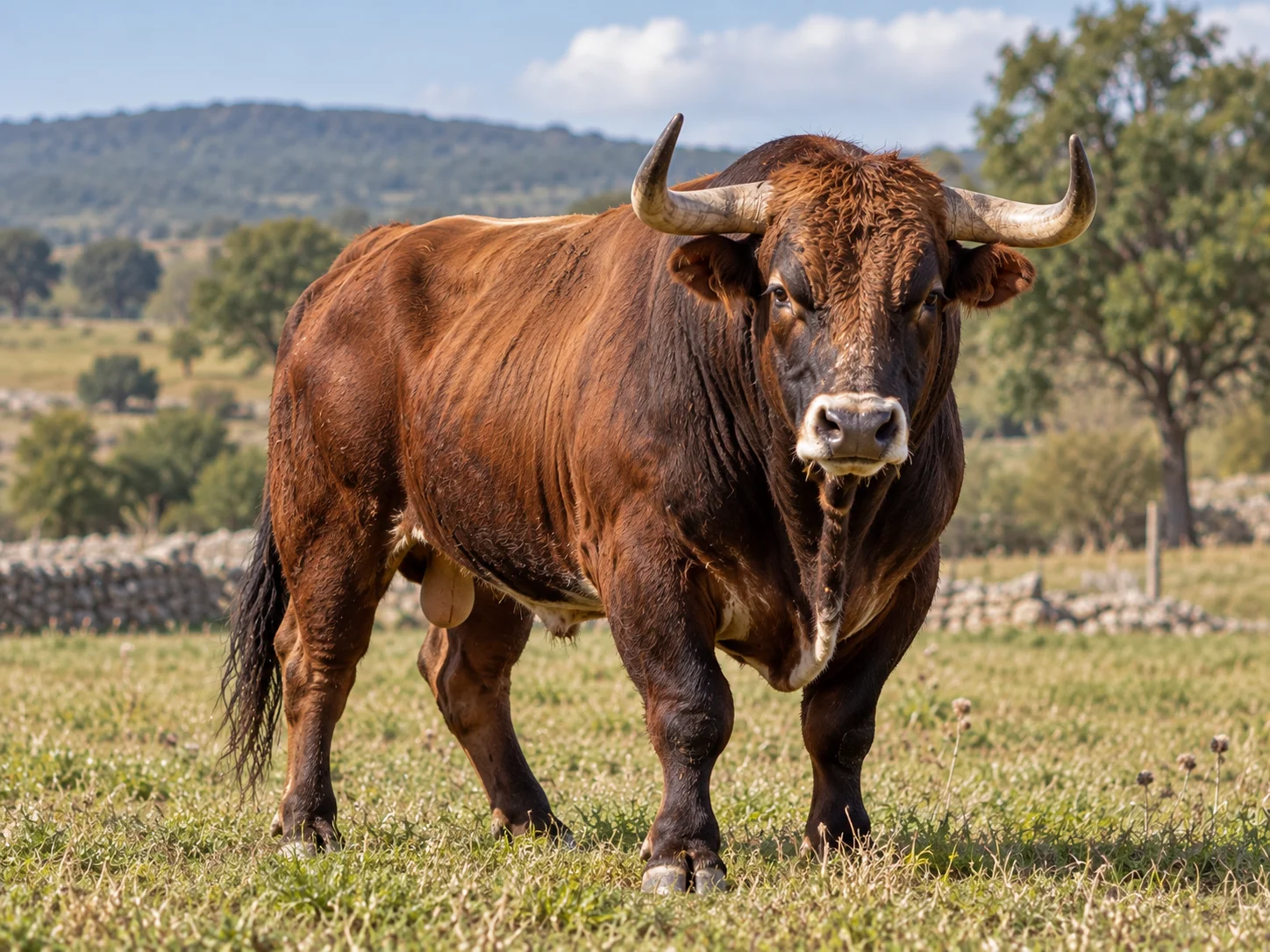
Testosterone builds a different body. A bull carries a heavy crest of muscle over the shoulders, a thicker neck and a broader head than a cow of the same breed, and he may outweigh her by several hundred pounds.
Bulls have a fearsome reputation, and a good deal of it is earned. The famous part about the color red, however, is nonsense.
Scientific Name and Classification
A bull’s scientific name is Bos taurus, the same as all domestic cattle. “Bull” describes sex and condition, not a separate species.
- Kingdom: Animalia
- Phylum: Chordata
- Class: Mammalia
- Order: Artiodactyla
- Family: Bovidae
- Genus: Bos
- Species: Bos taurus
The word is also used for adult males of many other large species, including elephants, rhinoceroses, seals and whales. In those cases it simply means “male”.
Do Bulls Hate the Color Red?
No, and the myth fails on two separate counts.
First, cattle are red-green colorblind. A bull physically cannot pick red out as a distinct color, so a red cape does not look red to him at all.
Second, what provokes a charge is movement and threat. In bullfighting two capes are used: a magenta one in the early stages and the red muleta later. The bull reacts to both exactly the same way, because he is responding to the sweep of the cloth and the person behind it. The red is for the crowd, and because it hides blood.
None of which makes bulls safe. They are large, strong, territorial around cows, and they injure farm workers every year. Wave anything at a bull, in any color, and the outcome may be the same.
Appearance and Anatomy
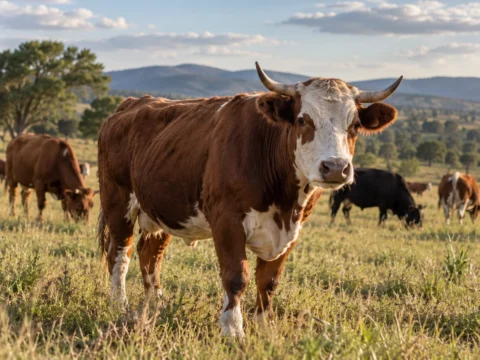
A bull typically stands 5 to 6 feet at the shoulder and weighs 1,000 to 2,600 pounds depending on breed. Hereford bulls run 2,200 to 2,600 pounds against 1,300 to 1,800 for cows of the same breed.
- Crest. A thick hump of muscle over the neck and shoulders that cows do not develop. It is the clearest visual giveaway.
- Head and neck. Broader and heavier, with a shorter, deeper face.
- Horns. In horned breeds, usually thicker and more heavily based than a cow’s. Horns are permanent and never shed.
- Dewlap. The loose fold of skin under the throat is often more pronounced.
- Hair. Many bulls grow a curlier, coarser patch on the forehead.
Habitat and Range
Bulls live wherever cattle are kept, which is every continent except Antarctica.
Herds need far fewer bulls than cows, so most male calves are castrated and raised as steers. A single bull may serve twenty to fifty cows, and many farms keep none at all, using artificial insemination instead. That means a bull is a much rarer animal on a farm than a cow.
Because of their strength and temperament, bulls are usually kept in strong fencing, separately from the main herd outside breeding periods.
Diet and Feeding
Bulls are herbivores and ruminants, eating grass, hay, silage and grain like all cattle.
Food is swallowed fast, fermented in the rumen by microbes, then brought back up as cud and chewed properly. A large bull eats a great deal simply to maintain his body mass, around 2 to 3 percent of his weight in dry feed daily, with water needs to match.
Behavior and Lifestyle
Bulls are social animals and live in herds, but they compete with each other for rank and for access to cows.
Most disputes are settled without real fighting. A bull displays: he stands side-on to look bigger, paws the ground, throws up dust, bellows, and rubs his head and horns in soil. Two evenly matched bulls may push head to head until one gives way.
Those same displays are the warning signs around people. A bull that turns side-on, paws, or lowers and swings his head is telling you to leave, and he means it.
Temperament varies by breed and by individual. Dairy bulls, particularly Holsteins and Jerseys, have a worse safety record than many beef breeds, partly because hand-reared bulls lose their natural wariness of humans.
Reproduction and Life Cycle
Bulls become fertile remarkably early, from around seven months old, which is why male calves intended for beef are usually castrated well before then.
A breeding bull is normally used from about two years of age. He plays no part in raising calves; cows do that alone.
One bull has enormous genetic reach. Through artificial insemination a single well-regarded bull can father tens of thousands of calves worldwide, which is exactly why modern cattle breeds have narrowed genetically.
Cattle can live 20 to 25 years. Breeding bulls are typically kept for only a few seasons.
Predators and Threats
An adult bull has few natural predators. Wolves and big cats take calves and occasionally weak adults, but a healthy bull is a dangerous target and will fight.
His real risks are injury from fighting, lameness under his own weight, and heat stress, which reduces fertility.
Bulls are also used in bullfighting and rodeo, practices that are banned in many countries and remain widely contested on animal-welfare grounds.
Conservation Status
Cattle are domestic animals and are not assessed by the IUCN. There are over 940 million worldwide.
Bulls do raise one specific conservation point. Because a handful of elite bulls father so many calves through artificial insemination, commercial cattle breeds are losing genetic variety fast, and traditional local breeds are disappearing with them.
Role in the Ecosystem
Bulls graze like the rest of the herd, helping keep grassland open and returning nutrients to the soil through their dung, which supports beetles, flies and the birds that eat them.
In conservation grazing projects, hardy cattle including bulls are deliberately used to do the job wild herds once did, keeping scrub down and maintaining open habitat for ground-nesting birds and wildflowers.
They carry the same environmental cost as all cattle: rumen fermentation produces methane, and grazing land and feed crops take up a great deal of the planet’s surface.