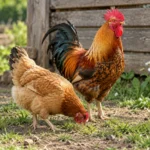
Meet the Hen
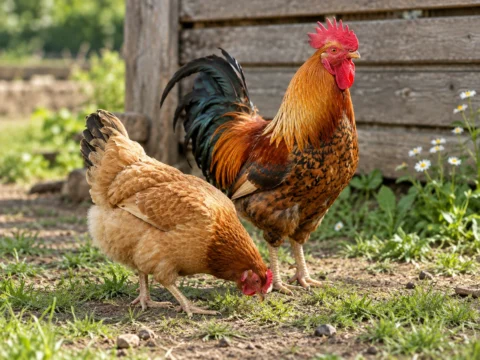
A hen is an adult female chicken, Gallus gallus domesticus. A young female under a year old is a pullet.
Hens are the reason chickens became the most numerous bird on Earth. A good laying hen produces 250 to 300 eggs a year, roughly one every day she is in lay, which is an extraordinary biological output for a bird that weighs about four pounds.
They are also attentive mothers who begin talking to their chicks before those chicks have hatched.
Scientific Name and Classification
A hen’s scientific name is Gallus gallus domesticus, the same as every chicken. “Hen” describes sex and age.
- Kingdom: Animalia
- Phylum: Chordata
- Class: Aves
- Order: Galliformes
- Family: Phasianidae
- Genus: Gallus
- Species: Gallus gallus domesticus
The word is also used for the females of other birds, including pheasants, turkeys and ducks, and even for female lobsters and crabs.
Do Hens Need a Rooster to Lay Eggs?
No. This is the single most common question about chickens, and the answer is a clean no.
A hen releases a yolk and builds an egg around it on a cycle of roughly 24 to 26 hours, whether or not a rooster has ever been near her. It works much like other female animals releasing an egg cell on a regular cycle.
What a rooster changes is whether that egg is fertilized, and so whether it could develop into a chick. Commercial egg farms keep no roosters at all, and the eggs in shops are unfertilized.
One more thing worth knowing: in many breeds the color of a hen’s earlobes predicts her egg color. White earlobes usually mean white eggs, red earlobes usually mean brown. Shell color has nothing to do with taste or nutrition.
Appearance and Anatomy
Hens stand roughly 1 to 1.5 feet tall and weigh 4 to 8 pounds depending on breed, smaller than roosters of the same breed.
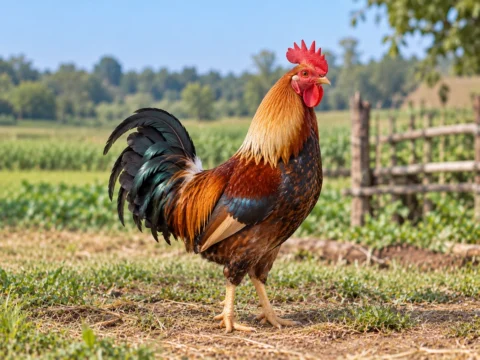
Where a rooster advertises, a hen hides. Her plumage is plainer, her tail short and rounded rather than arching, her comb and wattles much smaller, and she has no spurs. All of that matters for a bird that must sit still on a nest for three weeks without being noticed.
- Comb and wattles. Small, and a useful health indicator: bright red means a hen in lay, pale and shrunken means she has stopped.
- Oviduct. Building a complete egg, shell and all, takes about 24 to 26 hours.
- Crop and gizzard. Food is stored, then ground with swallowed grit, since hens have no teeth.
- Brood patch. A broody hen loses feathers from her belly so her bare skin can warm the eggs directly.
Habitat and Range
Hens live on every continent except Antarctica, in back gardens, on smallholdings, on free-range farms and in large commercial units.
They need a dry coop, a perch off the ground, nest boxes with some privacy, and loose earth to scratch and dust-bathe in. A hen looking for somewhere to lay wants a dark, enclosed, quiet corner, which is why free-range hens so often lay in hedges and sheds rather than the boxes provided.
Diet and Feeding
Hens are omnivores, eating grain, seeds, greens and fruit along with insects, worms, slugs and spiders.
A laying hen has one unusual requirement: calcium, and a great deal of it. Each eggshell is made largely of calcium carbonate, so laying hens are given oyster shell or limestone grit. Without enough, shells come out thin and the hen draws calcium from her own bones.
She also swallows grit so the gizzard can grind her food, and spends much of the day scratching backwards through soil and leaf litter to turn up whatever is underneath.
Behavior and Lifestyle
Hens live in flocks with a strict pecking order, and that term comes from them. Rank decides who feeds first and who gets the best perch, and it is usually settled by posture rather than fighting.
They recognize and remember 100 or more individual birds, as well as familiar people, and they form preferences about which hens they sit beside.
Egg laying has its own ritual. A hen inspects nest boxes, settles, takes some time over it, and afterward many make a loud repeated cackle. Hens will also queue for a favorite nest box while several identical empty ones sit unused.
Dust bathing is daily and often social: working dry soil through the feathers soaks up oil and smothers mites.
Reproduction and Life Cycle
A pullet starts laying at about five to six months old and lays most heavily in her first year, then gradually less with each one after.
Some hens go broody: they stop laying, sit tight on a clutch, puff up and object loudly to interference. A broody hen turns her eggs several times a day and leaves the nest only briefly.
Eggs hatch after about 21 days. In the final days before hatching the hen clucks softly to the eggs, and the chicks answer her from inside the shell, peeping back. By the time they hatch they already know her voice.
Chicks hatch with open eyes and down, and walk within hours. The hen broods them under her wings, shows them food with a special call, and defends them fiercely. Hens can live 8 to 10 years, though commercial laying hens are usually replaced after one or two laying seasons.
Predators and Threats
Foxes, hawks, owls, raccoons, weasels, snakes, dogs and rats all take hens, chicks or eggs. A hen sitting on a nest is especially vulnerable, since she will not leave.
Her defenses are camouflage, alarm calls, the flock’s shared watchfulness and roosting high at night.
Health problems that affect laying hens particularly include calcium shortage, egg binding, mites and avian influenza.
Conservation Status
Chickens are domestic birds and are not assessed by the IUCN. Laying hens number in the billions.
Welfare, rather than numbers, is the live issue. Conventional battery cages are now banned in the European Union, the United Kingdom and several US states, and barn, free-range and enriched-cage systems have replaced them to varying degrees. Rehoming schemes also take commercial hens at the end of a laying season and place them in back gardens, where many go on laying for years.
Role in the Ecosystem
A few hens in a garden are quietly useful. They eat slugs, ticks and insect pests, scratch and aerate the soil surface, turn kitchen scraps into fertilizer, and keep weed seedlings down.
Rotating hens through orchards and vegetable beds is an old practice for exactly those reasons.
At industrial scale the balance shifts. Billions of laying hens require vast quantities of feed crops, mainly soy and maize, and that drives land clearance in several parts of the world. The same bird is both a near-perfect garden companion and, in aggregate, a significant environmental load.