Meet the Kite
The toy is named after the bird, not the other way around. People watched kites hang almost motionless in the wind, tilting a forked tail to hold position, and named a thing on a string after them.
Kites are raptors built for soaring rather than speed. They are the birds of prey that drift, circling on flat wings and barely flapping, scanning the ground below.
Some of them may also deliberately spread fire, which would make them one of very few animals known to use it.
Scientific Name and Classification
“Kite” covers several groups of birds of prey, so there is no single two-word name. The black kite is Milvus migrans and the red kite is Milvus milvus.
- Kingdom: Animalia
- Phylum: Chordata
- Class: Aves
- Order: Accipitriformes
- Family: Accipitridae
Kites belong to the same family as hawks, eagles and buzzards. Within it, the name is applied loosely to around 20 to 30 species across several branches, grouped by how they fly rather than by close kinship.
The black kite is one of the most numerous birds of prey in the world.
Do Kites Really Spread Fire?
This is one of the more remarkable claims in bird behavior, and it deserves to be stated carefully.
Birds of prey gather at the edges of bushfires in northern Australia, because fire drives insects, lizards and small mammals out of cover and makes them easy to catch. That part is not in doubt and is easily observed.
The striking claim goes further. Aboriginal knowledge in northern Australia has long described black kites, whistling kites and brown falcons picking up burning sticks and dropping them in unburnt grass, starting new fires and flushing fresh prey. A paper published in 2018 collected these accounts together with reports from firefighters and rangers who say they have seen it.
Because the behavior is quick, rare and happens in dangerous conditions, it has not yet been captured in the kind of controlled footage that would settle it, and some researchers remain unconvinced. The birds are nicknamed firehawks.
If it is confirmed, it puts kites in extremely small company. Almost no animal besides humans is known to use fire deliberately.
Appearance and Anatomy
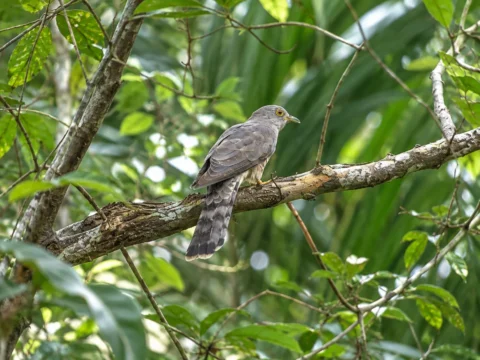
Kites measure 19 to 28 inches long with wingspans of 4.5 to 6 feet, and weigh 1.3 to 2.9 pounds. They look larger than they are, because they are unusually light for their wing area.
- Wings. Long, broad and held flat or slightly bowed, with a low weight for the area, which is what allows them to soar for hours with almost no flapping.
- Tail. Forked, and used constantly as a rudder. A red kite twists its tail through small angles to hold its position in a crosswind, and that movement is the surest way to identify one.
- Talons. Relatively weak for a raptor, which suits a bird that scavenges and takes small prey rather than wrestling anything large.
- Eyesight. Excellent, able to spot carrion or a small animal from a great height.
- Plumage. Red kites are rich chestnut with a pale gray head; black kites are dark brown and less boldly marked.
They can snatch food from the surface of water or from the ground without landing, and sometimes eat on the wing.
Habitat and Range
Kites live across Europe, Africa, Asia, Australia and the Americas, in woodland edge, farmland, grassland, wetland, coast and city.
They are unusually comfortable around people. Black kites are a common sight over cities across South Asia and Africa, nesting on buildings and feeding on scraps, and in some cities they reach densities higher than almost any other large bird of prey anywhere.
Many are long-distance migrants. European black kites winter in Africa, crossing at narrow points like Gibraltar in flocks of thousands.
Red kites are largely resident, and they need open country with scattered trees to nest in.
Diet and Feeding
Kites are carnivores, and much more scavenger than hunter.
They eat carrion, roadkill, fish, worms, insects, small mammals, young birds, reptiles and a great deal of human food waste.
That flexibility is the whole reason they succeed. A bird that will eat a dead rat, a grasshopper, a dropped sandwich or a fish floating in a canal is a bird that can live almost anywhere.
They are bold about it, and will steal food from other birds, from each other, and occasionally straight out of a person’s hand.
Red kites in particular rarely kill anything larger than a small rodent, which matters to a persistent myth discussed below.
Behavior and Lifestyle
Kites are social for raptors, which is unusual. They gather at food in numbers, migrate in flocks, and roost communally in winter, sometimes dozens of birds in one group of trees.
They spend much of the day on the wing, riding thermals and barely beating their wings.
They have an odd habit of decorating the nest. Red kites line theirs with whatever they find, including plastic bags, paper, cloth and once-famously stolen laundry, and Shakespeare mentions kites taking linen.
Their flight call is a long thin whistle, quite unlike the harsh scream of a buzzard.
Reproduction and Life Cycle
Kites build stick nests in tall trees, often reusing and adding to the same one year after year until it becomes substantial.
Clutches run to 1 to 4 eggs, incubated for around a month, mostly by the female while the male brings food.
Chicks fledge at seven to eight weeks and stay near the nest for a few weeks more, learning to soar and to find food.
Kites usually pair for the season and often for life, and many return to the same territory each year.
They live 10 to 25 years, with ringed red kites recorded past 25.
Predators and Threats
Adult kites have few predators, though eagles and large owls take them and nests are raided by crows, martens and squirrels.
Poisoning is the main threat, and it is usually indirect: kites eat carrion, so a poisoned carcass left out for foxes or crows kills the kites that find it. Rodenticides accumulate the same way. Because kites scavenge, they are hit harder by this than hunting raptors.
They are also shot illegally, collide with power lines and wind turbines, and lose nest trees to clearance.
The old persecution rested on a false premise. Red kites were killed for centuries as a threat to lambs and poultry, when in fact they are scavengers that very rarely kill anything larger than a small rodent, and will take a dead lamb but not a live one.
Conservation Status
Most kites are doing reasonably well, and the black kite is abundant and widespread.
The red kite is one of conservation’s clearest success stories. Persecution reduced it in Britain to a handful of pairs clinging on in mid-Wales, genetically traced to a single surviving female line. A long reintroduction program from the late 1980s released birds from Spain and Sweden, and red kites now number in the thousands across Britain and are a common sight over some motorways.
It took decades and it worked, which is worth saying when conservation news is mostly bad.
Other kites are in trouble, and some island and specialist species have small declining populations.
Role in the Ecosystem
Kites are among the most useful scavengers in the bird world. By clearing carrion and waste quickly they remove material that would otherwise rot and spread disease, and in cities with poor waste collection that service is substantial.
They control rodents and insects, including locust swarms, which several kite species follow and feed on in numbers.
Because they are scavengers at the top of the food chain, they are also an early warning system: poisons in the environment accumulate in kites, so a decline in kites often means something is wrong further down.
And if the firehawk reports are confirmed, kites will have taught us something about animal intelligence that nobody expected from a bird.