Meet the Ape
Apes are our closest living relatives. A chimpanzee shares around 98 percent of its DNA with you, and the resemblance goes well past genetics: apes make tools, learn sign language, recognize themselves in mirrors, grieve for their dead and wage something close to war.
There are only a handful of them. Depending on how you count, around 20 to 26 species: chimpanzees, bonobos, gorillas, orangutans, gibbons, and humans.
That last one is not a joke. Humans are apes, by every measure biologists use.
Scientific Name and Classification
Apes form the superfamily Hominoidea, so they have no single two-word scientific name.
- Kingdom: Animalia
- Phylum: Chordata
- Class: Mammalia
- Order: Primates
- Superfamily: Hominoidea
The superfamily splits in two:
- Great apes (family Hominidae): orangutans, gorillas, chimpanzees, bonobos and humans.
- Lesser apes (family Hylobatidae): the gibbons and siamangs, around 20 species of smaller, long-armed apes from Southeast Asian forests.
Apes sit inside the monkey family tree rather than beside it, which has an odd consequence: Old World monkeys such as baboons are more closely related to apes than they are to the monkeys of South America.
Types of Ape and Their Characteristics
| Ape | Where | Weight | Known for |
|---|---|---|---|
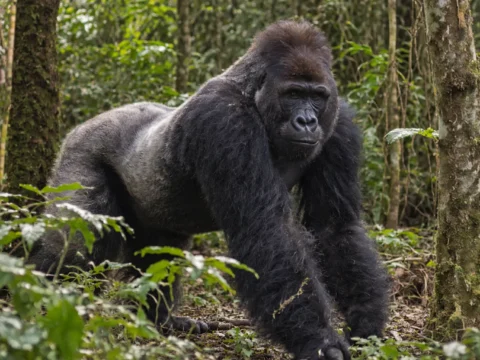
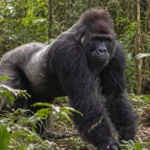
| Gorilla | Central Africa | 150-440 lb | The largest primate; gentle plant-eater |
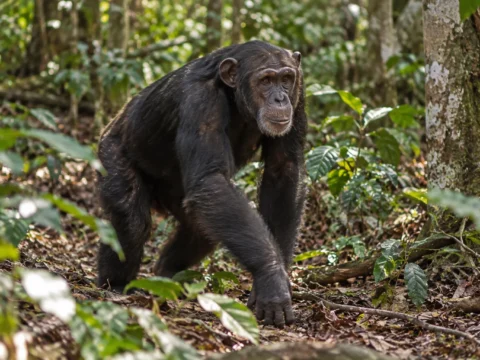
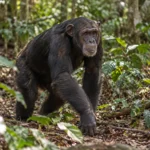
| Chimpanzee | West and Central Africa | 70-130 lb | Tool use, hunting, complex politics |
| Bonobo | DR Congo only | 70-130 lb | Peaceful, female-led societies |
| Orangutan | Borneo and Sumatra | 75-200 lb | The largest tree-dwelling animal |
| Gibbon | Southeast Asia | 12-30 lb | Swinging at speed; duetting songs |
Chimpanzees and bonobos look almost identical and behave very differently. Chimpanzee groups are male-dominated and can be extremely violent, including organized raids on neighbors. Bonobo societies are led by females and settle tension with affection rather than fighting. They are equally close relatives of ours, which is worth sitting with.
Appearance and Anatomy
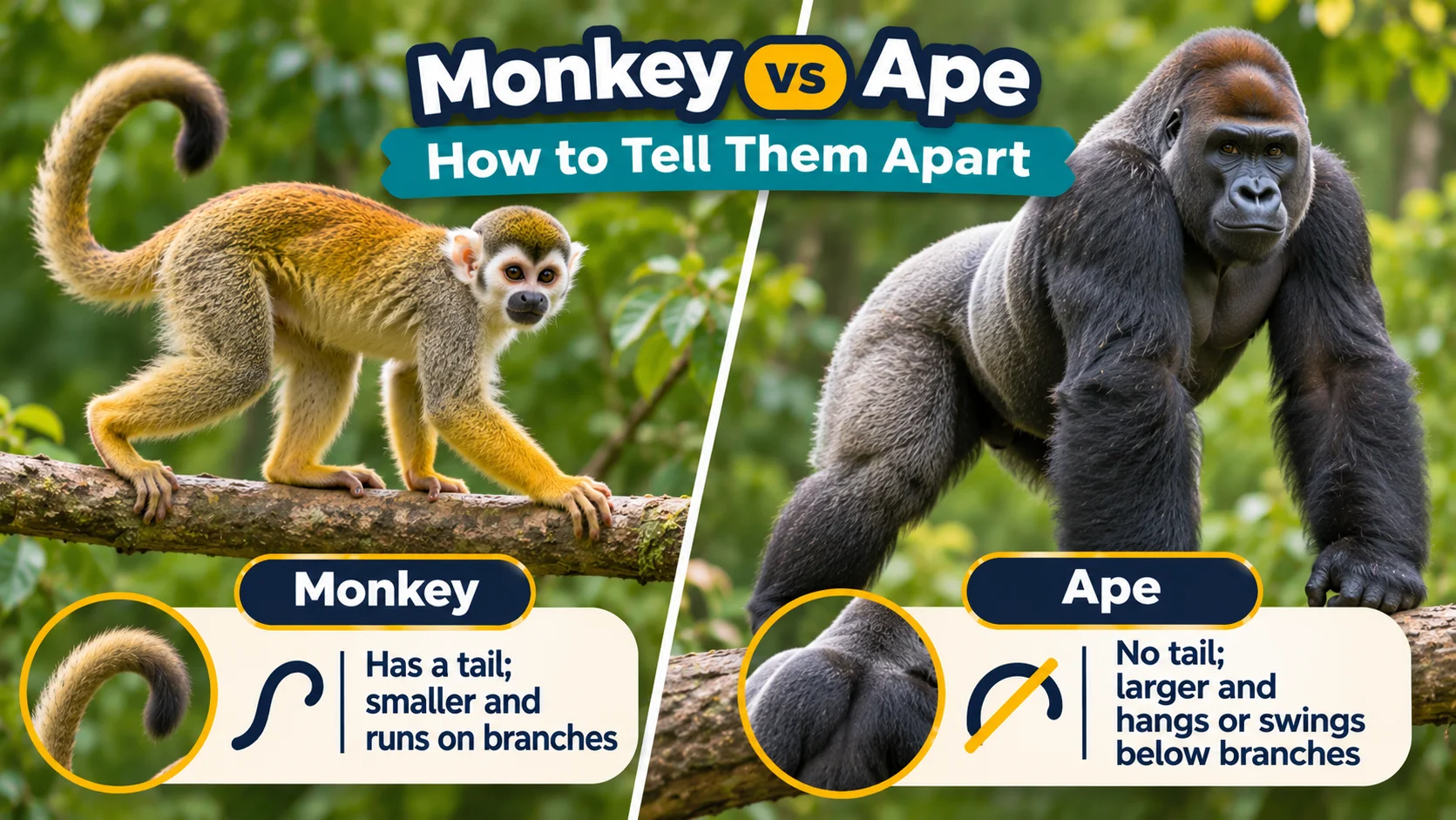
Apes range from gibbons at around 12 pounds to male gorillas at 440. All are tailless, broad-chested and built around mobile shoulders.
- Arms. Longer than the legs in most apes. An orangutan’s arm span reaches about 7 feet on a body half that tall.
- Hands. Opposable thumbs, flat nails, fingerprints, and the fine control needed to use tools.
- Brain. Large and folded, with the capacity for planning, learning by watching and solving problems.
- Face. Expressive, with muscles capable of a wide range of recognizable expressions.
- Movement. Gorillas and chimps knuckle-walk; gibbons swing hand over hand; orangutans climb carefully; humans walk upright.
Habitat and Range
Wild apes live in just two parts of the world. The African apes, gorillas, chimpanzees and bonobos, occupy rainforest and woodland across central and west Africa. The Asian apes, orangutans and gibbons, live in the forests of Southeast Asia.
Nearly all of them depend on large, connected forest, which is precisely the habitat disappearing fastest. Orangutans are confined to two islands, Borneo and Sumatra, and bonobos exist only south of the Congo River.
Humans, the one ape that left, now live everywhere.
Diet and Feeding
Most apes are omnivores leaning heavily on plants. Fruit is the staple for chimpanzees, bonobos, orangutans and gibbons, along with leaves, shoots, bark, seeds and insects.
Gorillas are the exception, living almost entirely on leaves, stems and pith. A silverback eats up to 40 pounds of vegetation a day, which is how the largest primate is built on salad.
Chimpanzees hunt. Groups coordinate to catch monkeys and small antelope, and the meat is shared according to rank and alliance.
Tool use is widespread. Chimpanzees strip leaves from twigs to fish termites out of mounds, crack nuts with stone hammers, and chew leaves into sponges to soak up water. These are local traditions: different communities use different tools, and the young learn by watching.
Behavior and Lifestyle
Ape societies are complicated. Chimpanzee communities run on shifting alliances, and a male’s rank depends as much on who supports him as on his strength. Gorillas live in family troops led by a silverback. Gibbons pair for long periods and sing loud duets that mark their territory. Orangutans are the loners, largely solitary once grown.
Great apes recognize themselves in mirrors, which very few animals do, and that is taken as evidence of self-awareness.
Several have learned hundreds of signs or symbols and used them to make requests and comment on things, though whether that counts as language is still argued over.
They also show behavior that is hard to describe except as grief. Mothers carry dead infants for days, and chimpanzee groups fall quiet around a body.
Every great ape builds a fresh sleeping nest of bent branches each night, and has to be taught how.
Reproduction and Life Cycle
Apes reproduce slowly, which is central to why they are so vulnerable.
Pregnancy runs about 7 to 9 months and produces a single infant. Twins are rare.
Infants are helpless and dependent for years. A young orangutan stays with its mother for six to eight years, learning which hundreds of forest foods are safe and how to reach them, the longest childhood of any animal except ours.
Females give birth only every four to eight years. A population that loses adults cannot bounce back quickly, however well the survivors are protected.
Apes live 35 to 60 years in the wild and longer in captivity.
Predators and Threats
Leopards take chimpanzees and gorillas occasionally, and large eagles and snakes take young gibbons. An adult gorilla has essentially no natural predator.
The threats that matter are entirely human: forest cleared for timber, palm oil and farmland; hunting for bushmeat; capture of infants for the pet trade, which usually means killing the mother; and disease. Ebola has killed thousands of gorillas and chimpanzees, and because apes are so like us they catch our illnesses easily, which is why researchers and tourists wear masks around them.
Conservation Status
This is the bleakest section on this page. Every species of great ape is Endangered or Critically Endangered. Not one is safe.
Both gorilla species are Critically Endangered. All three orangutan species are Critically Endangered, and the Tapanuli orangutan, identified as a separate species only in 2017, numbers under 800 animals. Chimpanzees and bonobos are Endangered. Most gibbon species are threatened, several critically.
There are hopeful parts. Mountain gorilla numbers have climbed back above a thousand through intensive protection and tourism that pays local communities to keep the forest standing, and that was achieved with an animal almost written off.
The one ape doing well is us. The other seven billion-odd individuals in Hominoidea are almost all human.
Role in the Ecosystem
Apes are the gardeners of tropical forests. A fruit-eating chimpanzee or orangutan swallows seeds and carries them far from the parent tree, and many large-seeded rainforest trees have no other way to travel. Forests that lose their apes slowly lose those trees too.
Gorillas open up the understory as they feed, letting light reach the forest floor and new growth come through.
Because they need large unbroken forest, apes also serve as an umbrella: protecting enough habitat for a gorilla troop protects everything else living in it.