Meet the Alligator
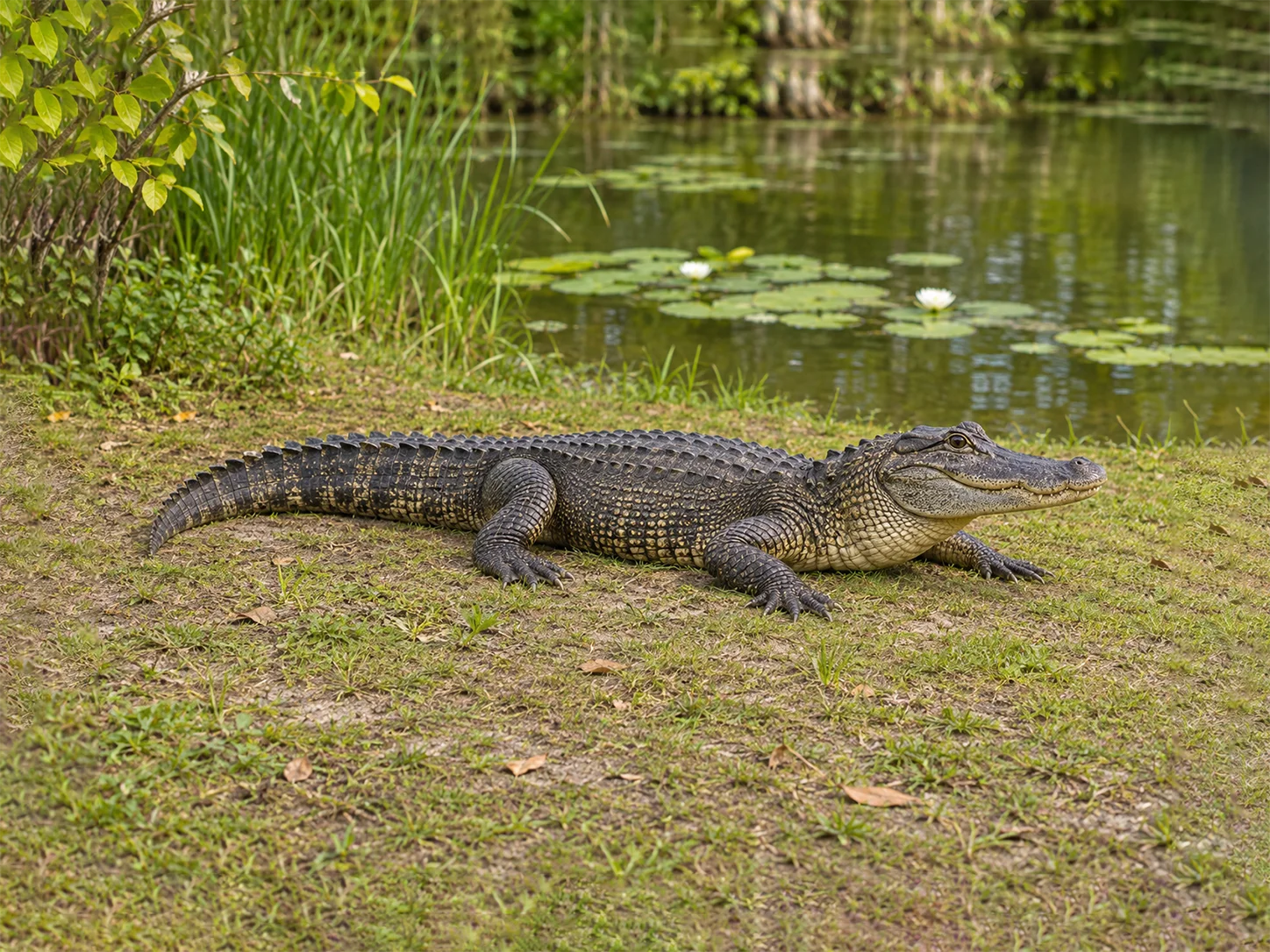
An alligator mother is one of the most devoted parents in the reptile world. She builds a nest, guards it for two months, digs her babies out when they call from inside the eggs, carries them to water in a mouth full of teeth, and protects them for a year.
There are only two species of alligator left, and they live on opposite sides of the world: one in the southeastern United States, one in a small stretch of the Yangtze River in China.
The American alligator is also one of conservation’s biggest success stories. It was listed as endangered in 1967 and had recovered enough to come off the list by 1987.
Scientific Name and Classification
There are two living alligator species, both in the genus Alligator.
- American alligator (Alligator mississippiensis), common across the southeastern United States.
- Chinese alligator (Alligator sinensis), one of the most endangered reptiles in the world.
- Kingdom: Animalia
- Phylum: Chordata
- Class: Reptilia
- Order: Crocodylia
- Family: Alligatoridae
- Genus: Alligator
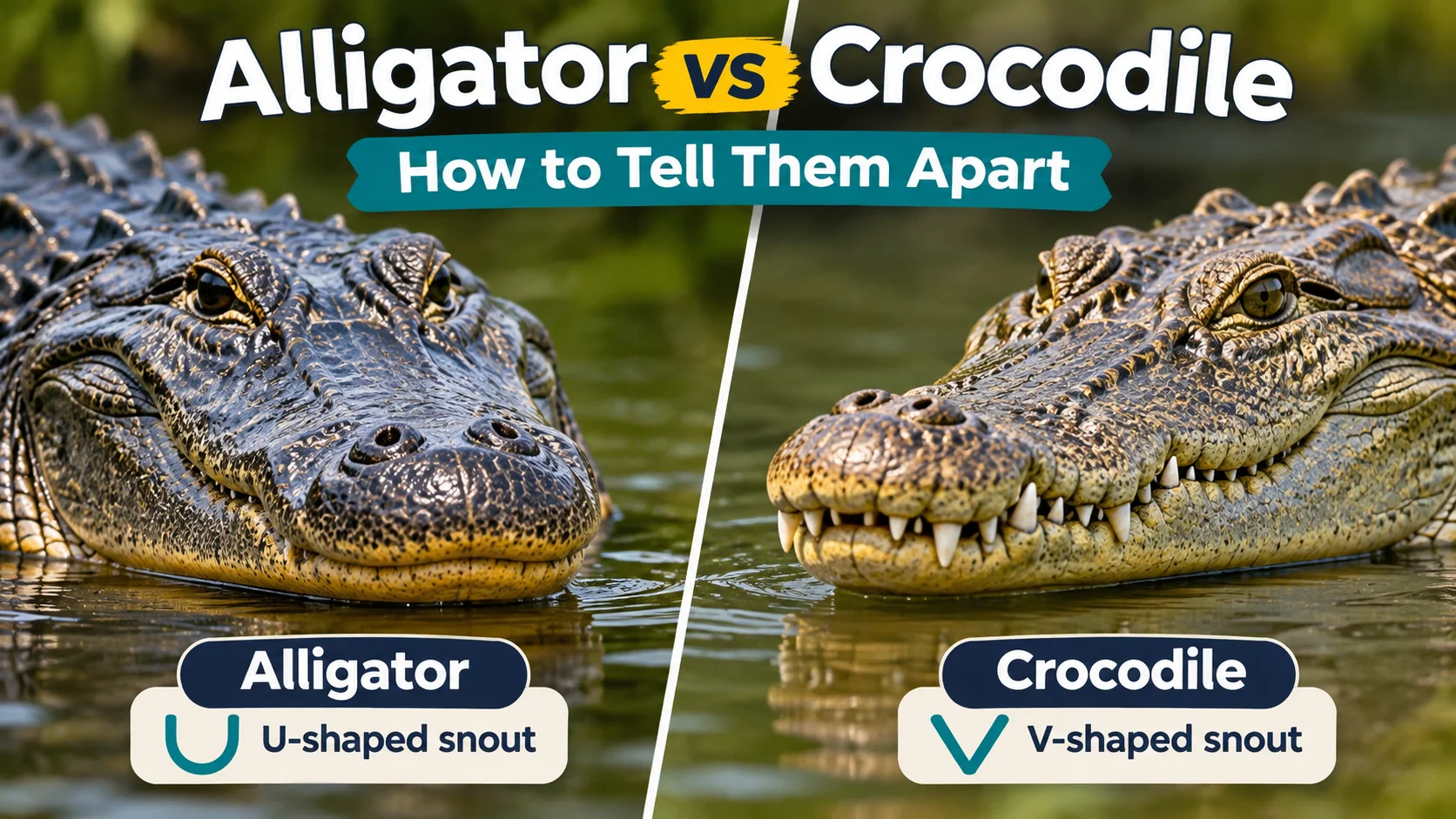
The family Alligatoridae also contains the caimans of Central and South America, which are close relatives.
Like crocodiles, alligators are more closely related to birds than to lizards or snakes. All of them descend from the archosaurs, the group that produced the dinosaurs.
Appearance and Anatomy
American alligators reach 10 to 15 feet and 400 to 1,000 pounds, with large males heavier. Chinese alligators are much smaller, usually under 7 feet.
- Jaws. Enormously strong closing, weak opening. A person can hold an alligator’s mouth shut with their hands, which is why handlers tape them.
- Teeth. Around 80, replaced continuously. An alligator may get through 2,000 to 3,000 in a lifetime.
- Eyes, ears and nostrils. All on top of the head, so it can lie submerged and still see, hear and breathe.
- Tail. Makes up about half the body length and powers all the swimming.
- Armor. Bony plates called osteoderms under the back scales, which also absorb heat while basking.
Despite their bulk they can move fast in short bursts, around 11 miles an hour on land, though they tire almost immediately.
Habitat and Range
American alligators live across the southeastern United States, from the Carolinas to Texas, with the largest populations in Florida and Louisiana. They use swamps, marshes, rivers, lakes and increasingly golf courses and drainage canals.
Chinese alligators survive in a tiny area of the lower Yangtze River basin, in wetlands largely converted to rice paddies.
Alligators handle cold better than crocodiles. In a freeze they will poke their snouts above the water surface and let ice form around them, keeping an airhole open and waiting it out in a dormant state called brumation.
Diet and Feeding
Alligators are carnivores. Young ones eat insects, snails, small fish and frogs; adults take fish, turtles, birds, snakes and mammals up to the size of deer.
They are ambush hunters, lying almost entirely submerged and exploding upward when something comes close.
Their teeth grip but cannot chew, so large prey is torn apart with the death roll, spinning the whole body to twist off a piece.
Alligators have also been recorded using tools, which almost nobody expects of a reptile. During nesting season some balance sticks on their snouts while lying in shallow water near heron colonies, and birds hunting for nest material come within reach.
Being cold-blooded, they eat remarkably little and can go months without food.
Behavior and Lifestyle
Alligators are more social than people assume, basking together and tolerating each other outside the breeding season.
Males bellow in spring, a deep roar that carries across the water. They also produce infrasound, so low that it makes the water above their backs jump and dance, a display called the water dance.
Days revolve around temperature: basking on banks in the morning, sliding into water when too hot. An alligator lying with its mouth open is cooling down, not threatening.
They dig gator holes, depressions in the mud that hold water through dry seasons, and they maintain them for years.
Reproduction and Life Cycle
A female alligator builds a mound nest of mud and rotting vegetation, lays 20 to 50 eggs inside, and covers them. The decaying plants generate heat and act as an incubator.
There are no sex chromosomes. The temperature of the nest decides whether the hatchlings are male or female: warmer eggs near the top produce males, cooler ones near the bottom produce females.
She guards the nest for about 65 days. When the babies are ready they call from inside the eggs, and she digs them out, gently cracking stubborn shells in her jaws, then carries them to water in her mouth.
Hatchlings stay with her for up to a year in a group called a pod, and she defends them fiercely. Even so, most are eaten.
Alligators live 30 to 50 years in the wild and longer in captivity.
Predators and Threats
Adults have essentially no predators apart from larger alligators. Eggs and hatchlings are eaten by raccoons, birds, otters, fish, snakes and adult alligators.
Historically the threat was hunting for skins, which nearly wiped the American alligator out by the 1960s.
Today the problems are habitat loss, water pollution, and conflict as housing spreads into wetlands. Alligators fed by people lose their wariness, which is how most dangerous encounters begin. Feeding an alligator is illegal in Florida for exactly that reason.
Conservation Status
The two alligator species could hardly be further apart.
The American alligator is a genuine triumph. Hunted to the brink for its hide, it was protected in 1967, recovered quickly, and was removed from the endangered list in 1987. There are now well over a million, and regulated farming supplies skins so wild animals are not taken.
The Chinese alligator is Critically Endangered, with perhaps 150 to 300 left in the wild, confined to a few small wetlands in a heavily farmed river basin. Thousands live in captivity, and reintroductions are underway, but there is very little habitat left to return them to.
Role in the Ecosystem
Alligators are a keystone species of American wetlands, and the clearest reason is the gator hole.
By digging and maintaining these depressions, an alligator creates pools that hold water through the dry season when everything around them dries out. Fish, turtles, frogs, insects and birds survive in those pools, and the whole wetland restocks from them when the rains return. One animal’s housekeeping keeps an entire system alive.
Their abandoned nest mounds become raised dry ground where plants grow and turtles lay their own eggs.
As top predators they also keep numbers of fish and mammals in balance, and remove the sick and the weak.