Meet the Crocodile
A crocodile bites harder than any other animal alive. A large saltwater crocodile has been measured at around 3,700 pounds per square inch, enough to crush a turtle shell. A lion manages roughly a sixth of that.
“Crocodile” covers roughly 14 to 16 species in the family Crocodylidae, from the saltwater crocodile, the largest reptile on Earth, down to the West African dwarf crocodile at under five feet.
They are also far older than us in design. Crocodiles belong to a lineage that was hunting in rivers while dinosaurs walked past, and the basic body has barely needed changing since.
Scientific Name and Classification
True crocodiles form the family Crocodylidae, so there is no single two-word name for them. Most belong to the genus Crocodylus, alongside the slender-snouted crocodiles and the dwarf crocodiles.
- Kingdom: Animalia
- Phylum: Chordata
- Class: Reptilia
- Order: Crocodylia
- Family: Crocodylidae
- Main genus: Crocodylus
The wider order Crocodylia holds 26 living species in total: the true crocodiles, the alligators and caimans, and the gharial.
One fact tends to stop people: crocodiles are more closely related to birds than to lizards or snakes. Both descend from the archosaurs, the group that also produced the dinosaurs.
Appearance and Anatomy
Crocodiles range from under 5 feet and 15 pounds for a dwarf crocodile to over 20 feet and 2,400 pounds for a large saltwater male. The biggest ever measured, a saltwater crocodile caught in the Philippines in 2011, was 20.2 feet long.
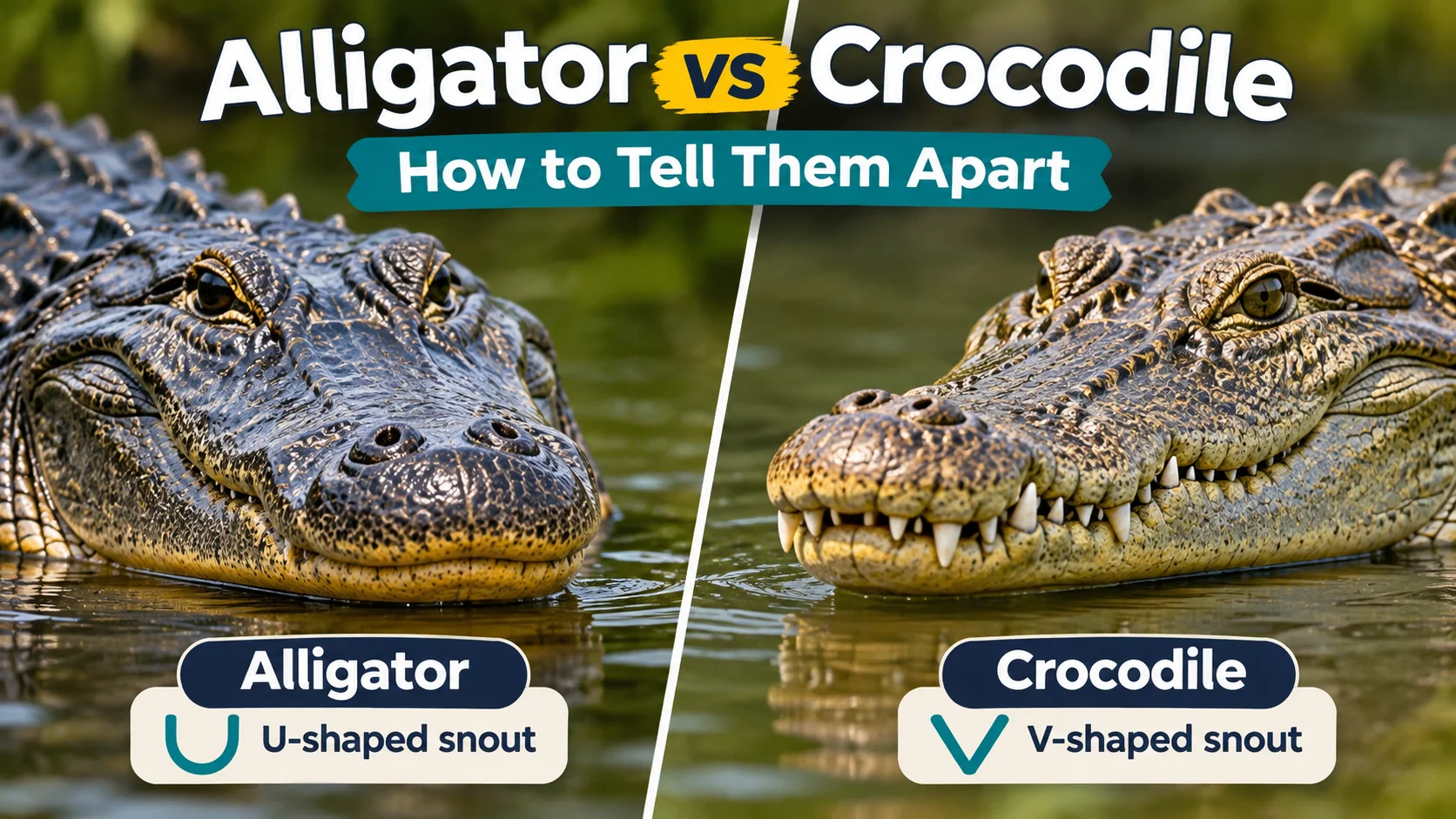
- Jaws. Enormously strong closing, surprisingly weak opening. The muscles that shut the jaws are massive; those that open them are not, which is why a strap around a crocodile’s snout holds it shut.
- Teeth. Conical and replaced throughout life. One saltwater crocodile may get through 8,000 teeth in a lifetime.
- Eyes, ears and nostrils. All set on top of the head, so the animal can lie almost completely submerged and still see, hear and breathe.
- Third eyelid. A clear membrane slides across each eye underwater, like built-in goggles.
- Throat valve. A flap at the back of the throat seals it off, so a crocodile can open its mouth underwater without drowning.
- Armor. Bony plates called osteoderms sit under the scales of the back, and help with heat as well as defense.
- Tail. Muscular and flattened, the engine for swimming.
Saltwater crocodiles also have salt-excreting glands on the tongue, which is how they cross open sea between islands.
Habitat and Range
Crocodiles live across the tropics: Africa, southern Asia, northern Australia, and parts of Central and South America.
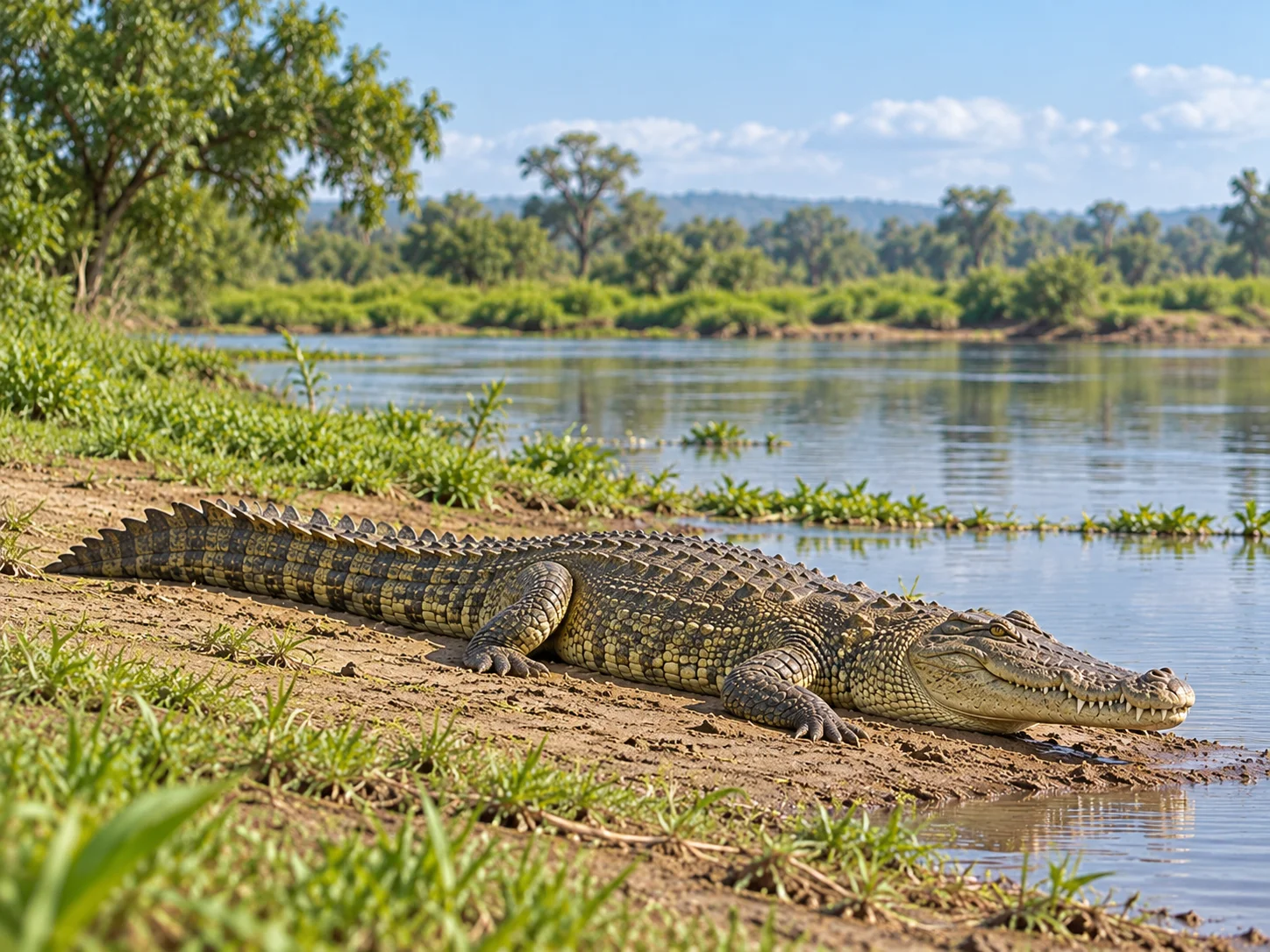
They need warmth, since they cannot generate their own heat, and water. Rivers, lakes, swamps, mangroves and estuaries all suit them, and saltwater crocodiles range well out to sea.
Days are organized around temperature: basking on a bank in the morning, moving into water when too hot. A crocodile that lies on land with its mouth wide open is not threatening anyone, it is losing heat through the mouth, the way a dog pants.
Diet and Feeding
Crocodiles are carnivores and apex predators. Young ones eat insects, crustaceans and small fish; adults take fish, turtles, birds, and mammals up to the size of a buffalo.
The method is ambush. A crocodile waits at a drinking spot, almost entirely submerged, sometimes for hours, then explodes upward and seizes the animal. Prey is dragged under and drowned.
Those teeth grip but do not chew, so a crocodile cannot cut up food in its mouth. Instead it clamps on and spins its whole body to twist off a chunk, the move known as the death roll.
Being cold-blooded makes them extraordinarily economical. A large crocodile may eat only a handful of substantial meals a year, and can go months without food.
Behavior and Lifestyle
Crocodiles are far more social than their reputation allows. They share basking banks, feed together at good sites, and communicate with growls, hisses, bellows and infrasound rumbles felt as much as heard.
Large males hold territory and fight over it, and the biggest animals take the best stretches of river.
They are quicker than people expect. Short bursts over land reach about 10 miles an hour, and some small species gallop. In water a saltwater crocodile can manage around 15 miles an hour.
They also use tools, which almost nobody expects of a reptile. During nesting season, crocodiles in some regions balance sticks on their snouts while lying in shallow water near heron colonies. Birds come for nesting material, and the crocodile has lunch.
Reproduction and Life Cycle
A nesting crocodile lays 20 to 80 eggs, buried in a sandy hole or a mound of rotting vegetation, and guards the nest closely for about three months.
There are no sex chromosomes. The temperature of the nest decides whether the hatchlings are male or female, which means a shifting climate can skew an entire generation toward one sex.
When ready, the babies call from inside the eggs, and the mother digs them out in response. She then carries them to the water in her mouth, holding animals she could crush without effort, and guards them for weeks or months afterward. For a reptile, this is remarkable parental care.
Even so, most hatchlings are eaten in their first year by birds, fish, monitor lizards and adult crocodiles. Those that survive mature at around 10 to 12 years and may live 70 years or more.
Predators and Threats
An adult crocodile has essentially no natural predators besides larger crocodiles. Eggs and hatchlings are a different matter, and are eaten by almost everything.
The threats that count are human. Crocodiles were hunted close to collapse through the twentieth century for their skins, and many populations are still recovering. Habitat loss, drainage of wetlands, fishing nets and pollution all press on them.
Conflict is the hardest part. Crocodiles do kill people, particularly where villages depend on the same rivers, and that makes coexistence genuinely difficult rather than simply a matter of goodwill.
Conservation Status
There is no single status for crocodiles, because the family holds around 14 to 16 species doing very different things.
Some are a conservation success. Saltwater and Nile crocodiles were heavily hunted and have recovered strongly where they are protected, to the point of becoming abundant again in northern Australia.
Others are in serious trouble. The Philippine crocodile and the Cuban crocodile are both Critically Endangered, with very small wild populations confined to tiny areas.
Crocodile farming has played an odd but real part in the recovery. Supplying skins from farmed animals reduced the pressure to hunt wild ones, and gave governments a financial reason to protect wild populations.
Role in the Ecosystem
As apex predators, crocodiles shape everything below them. They remove sick and weak animals, keep fish populations in balance, and change where grazing animals dare to drink, which in turn affects how the vegetation grows along a river.
They move nutrients too. A crocodile feeding on land and dropping waste in water transfers energy between the two systems, and their droppings feed the fish that other animals depend on.
In dry seasons, the deep holes crocodiles dig and maintain hold the last water in a drying river, and those pools keep fish, turtles and birds alive until the rains return.