Meet the Cuckoo
A newly hatched cuckoo, blind and featherless, shoves the other eggs out of the nest. It works at it for hours, balancing each egg in a hollow on its back and heaving it over the rim, until nothing is left but itself.
Then the parents of the eggs it has just destroyed feed it, often until it is several times their own size.
This is brood parasitism, and the cuckoo is the most famous practitioner. It has produced one of the best-documented evolutionary arms races in nature.
Scientific Name and Classification
Cuckoos form the family Cuculidae, with around 150 species, so there is no single two-word name. The common cuckoo, the one with the famous call, is Cuculus canorus.
- Kingdom: Animalia
- Phylum: Chordata
- Class: Aves
- Order: Cuculiformes
- Family: Cuculidae
Here is something that surprises people: most cuckoos raise their own young. Only around 40 percent of the family are brood parasites. The rest build nests and bring up their own chicks like any other bird.
The roadrunner of the American southwest is a cuckoo, and a perfectly conventional parent.
The cuckoo clock is named after the call, not the other way around, and the words cuckold and cloud-cuckoo-land both trace back to the bird’s reputation.
Why Do Cuckoos Lay Eggs in Other Birds’ Nests?
Because it works, and the saving is enormous. A cuckoo that does not build, incubate or feed can put all of that effort into producing more eggs, and a single female may lay 20 or more in a season, each in a different nest.
Doing it successfully takes a startling amount of precision:
- She watches. The female spends days observing potential hosts from a perch, learning which nests are being built and when.
- She is fast. The actual visit takes about ten seconds. She drops in, removes one host egg, lays her own, and is gone before the owners return.
- Her egg is a forgery. Cuckoo eggs mimic the host’s eggs in color and markings. Different female lineages specialize in different hosts, each producing eggs matched to that species, and a female lays into the same host type her mother used.
- Her egg hatches first. Cuckoo eggs develop unusually quickly, partly because the female begins incubating internally before laying.
- The chick clears the nest. Within a day or two of hatching it pushes out every other egg and chick.
The chick then has to be fed as much as a whole brood would have been, and it solves that by cheating too: its begging call imitates the sound of several hungry chicks at once, so the foster parents work as hard as they would for a full nest.
The Arms Race with the Hosts
Host birds are not helpless, and the back-and-forth between them and cuckoos is one of the clearest examples of evolution in action anyone has documented.
Hosts have evolved counter-measures. Many species inspect their eggs and eject anything that looks wrong, which is why cuckoo mimicry has become so good. Some, like reed warblers, mob an adult cuckoo on sight. Others have evolved more complex, harder-to-copy egg patterns, which works rather like a security hologram.
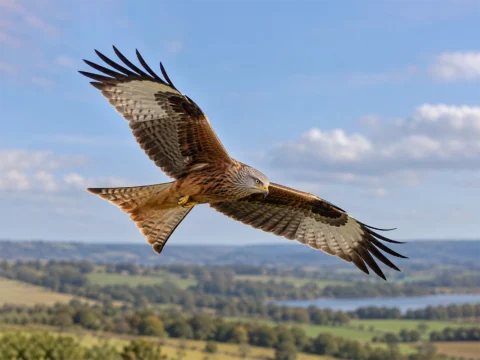
Cuckoos answer in turn. Adult common cuckoos resemble sparrowhawks in flight, with barred underparts, which makes small birds duck for cover instead of attacking.
The result is that each cuckoo lineage and its particular host are locked together, each change on one side forcing a change on the other. Hosts that have been parasitised for a long time are far better at spotting a fake than hosts that are new to it.
It is also worth being fair to the cuckoo. It is not cruel; it has no idea what it is doing. The behavior is instinctive, and the chick that clears the nest was hatched already knowing how.
Appearance and Anatomy
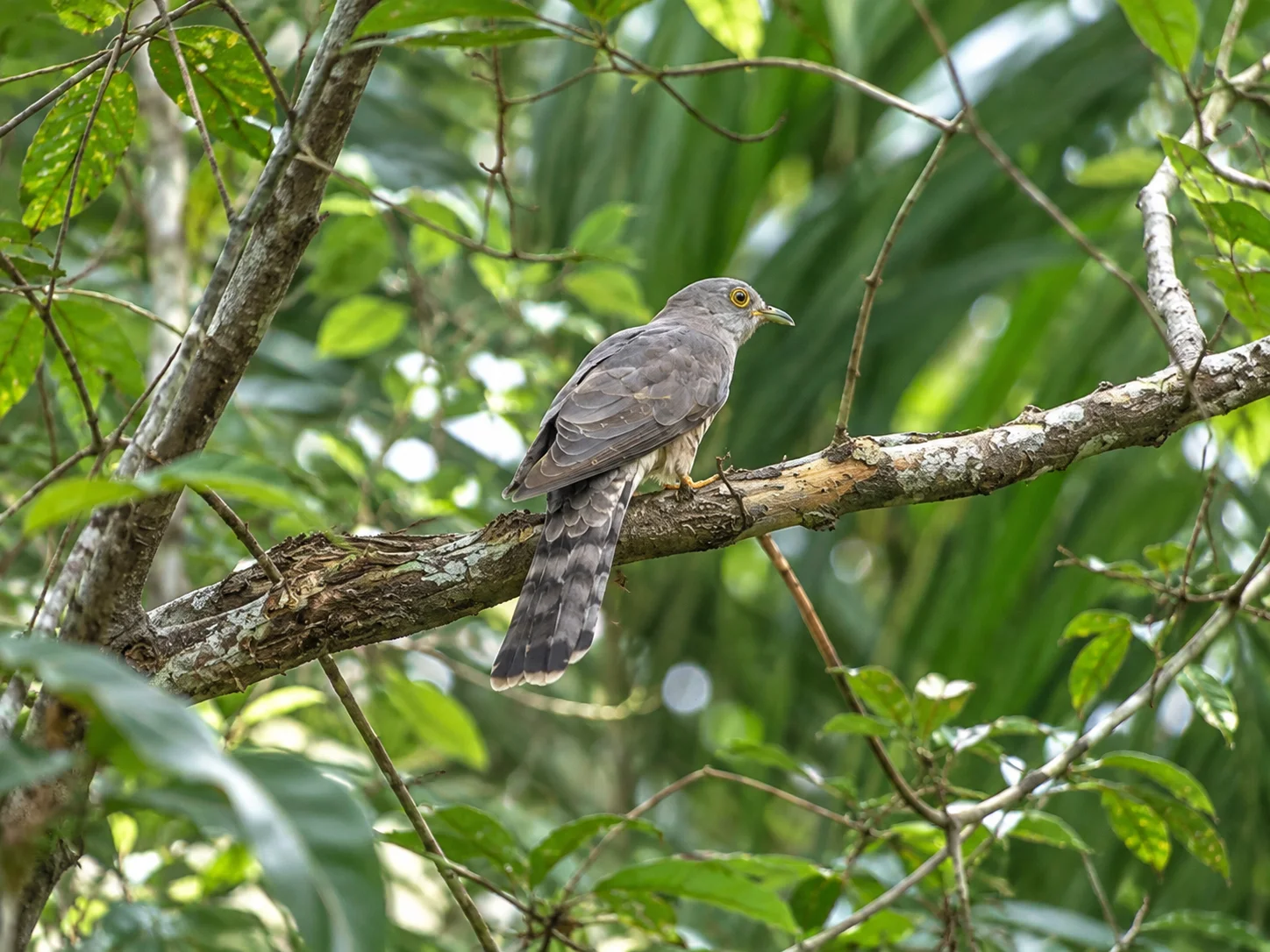
Cuckoos measure 6 to 25 inches long and weigh 1 to 25 ounces, depending on species. The common cuckoo is about 13 inches with a 2-foot wingspan.
- Shape. Slim, long-tailed and long-winged, which in flight gives the common cuckoo its hawk-like outline.
- Plumage. Gray above with barred underparts in the common cuckoo, strikingly similar to a sparrowhawk. Some females are a rufous brown form instead.
- Feet. Two toes forward and two back, as in woodpeckers.
- Bill. Slightly downcurved and strong.
- Gut. Able to handle hairy caterpillars that most birds refuse, which is their feeding specialty.
The famous two-note call belongs to the male common cuckoo. The female makes a very different bubbling chuckle, so the bird almost everyone can identify by sound is only half the species.
Habitat and Range
Cuckoos live on every continent except Antarctica, in woodland, scrub, reedbeds, grassland, desert and rainforest.
The common cuckoo breeds across Europe and Asia and winters in sub-Saharan Africa, and its migration is extraordinary for a bird that never meets its parents. Satellite tracking has followed individual cuckoos flying from Britain to central Africa, including non-stop crossings of the Sahara.
They do it entirely on instinct. Adults leave in June or July, before their own young have fledged, so a young cuckoo makes its first journey to Africa alone, with no adult to follow and no map but the one it was born with.
Diet and Feeding
Cuckoos are mainly insect eaters, and they have one notable specialty: hairy caterpillars.
Many caterpillars are covered in irritating hairs that make most birds leave them alone. Cuckoos eat them anyway, and periodically shed the stomach lining with the accumulated hairs in it, which is a drastic solution that works.
They also take beetles, ants, spiders, and in some species eggs, lizards and small birds, which makes the family omnivorous overall.
That caterpillar habit makes them genuinely useful, because the hairy species they eat include serious forest pests that few other birds will touch.
Behavior and Lifestyle
Common cuckoos are solitary and secretive outside the calling season, and far more often heard than seen.
Males call to hold a territory and attract females, and the call carries a long way through woodland, which is why it became the sound of spring across Europe.
They spend a remarkably short time on their breeding grounds. A common cuckoo may be in Britain for only six to eight weeks before heading south again, so the bird that announces the start of summer has usually left before summer is over.
Non-parasitic cuckoos behave quite differently, building nests, pairing up and in some species breeding cooperatively in groups.
Reproduction and Life Cycle
A female common cuckoo lays one egg per host nest, and 12 to 25 eggs in a season, each in a separate nest.
Common hosts in Europe include reed warblers, dunnocks, meadow pipits and pied wagtails, and each female specializes in one host type.
The egg hatches in around 11 to 12 days, usually before the host eggs, and the chick clears the nest within a day or two.
It fledges at about three weeks and is often grotesquely larger than its foster parents by then, with photographs of a tiny warbler feeding a cuckoo several times its size being among the most familiar images in bird books.
It then migrates to Africa alone. Cuckoos live around 4 to 6 years.
Predators and Threats
Sparrowhawks and other raptors take adult cuckoos, and host birds will destroy a cuckoo egg if they detect it.
The common cuckoo has declined sharply in parts of its range, particularly in Britain, and the reasons illustrate how a parasite depends on everything its hosts depend on.
Its problems include falling numbers of large moths and their caterpillars, declines in host species, changes in the timing of spring that leave cuckoos arriving after their hosts have already laid, habitat loss along a 5,000-mile migration route, and drought in the African wintering grounds.
A bird that needs its hosts, its caterpillars and two continents of habitat has a great many ways to be let down.
Conservation Status
The common cuckoo is listed as Least Concern globally, because it has an enormous range across Europe and Asia.
Regionally the picture is poor. Britain has lost a large share of its cuckoos in recent decades, and they are now red-listed there as a bird of conservation concern.
Satellite tagging projects have been genuinely useful here, revealing that cuckoos take two different routes south and that birds using one of them survive noticeably better, which is the kind of detail conservation needs and could not have guessed.
Some other cuckoos are more threatened, particularly island species and those in cleared tropical forest.
Role in the Ecosystem
Cuckoos control hairy caterpillars that almost nothing else will eat, including species that defoliate trees in large outbreaks. That is a real and specific service.
Their effect as parasites is more interesting than purely harmful. Because hosts that are regularly parasitised evolve sharper defenses, cuckoos have driven the evolution of egg recognition, nest defense and more complex egg patterns in a long list of other birds.
Scientifically the cuckoo is close to irreplaceable. It is the textbook case of coevolution, and much of what biologists understand about arms races, mimicry and how deception evolves has come from studying this one relationship.
And it is a useful corrective. The cuckoo is often described as wicked, which is a human judgment on an instinct. What it actually demonstrates is that evolution rewards whatever works, and makes no distinction at all between the admirable and the appalling.