Meet the Yabby
A yabby can wait out a drought. When its creek dries up, it digs down into the mud, seals itself in, and lies there dormant for years until the water comes back.
It is a freshwater crayfish from Australia, and that one ability explains why it is everywhere. The yabby has the largest distribution of any freshwater species currently in Australia, on a continent where water is the thing most likely to vanish.
It is also the animal a great many Australian children meet first. Yabbying, with a lump of meat on a string, is a summer institution.
Scientific Name and Classification
The common yabby is Cherax destructor, in the family Parastacidae, the southern hemisphere freshwater crayfish.
- Kingdom: Animalia
- Phylum: Arthropoda
- Subphylum: Crustacea
- Class: Malacostraca
- Order: Decapoda
- Family: Parastacidae
- Species: Cherax destructor
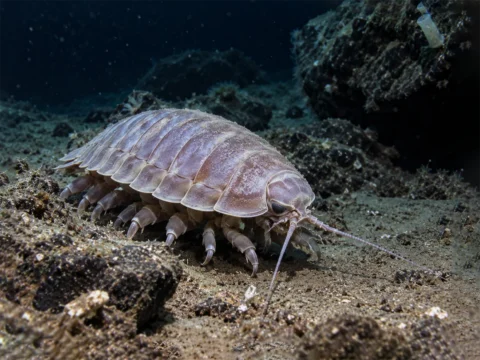
Decapoda means ten feet, the order that holds crabs, lobsters, shrimp and all the crayfish. A yabby is a close relative of the isopod only in the broad sense that both are crustaceans; the yabby is in the group with the big claws.
The species name is not a compliment. Yabbies burrow, and burrowing into the wall of a farm dam does the dam no good at all.
Appearance and Size
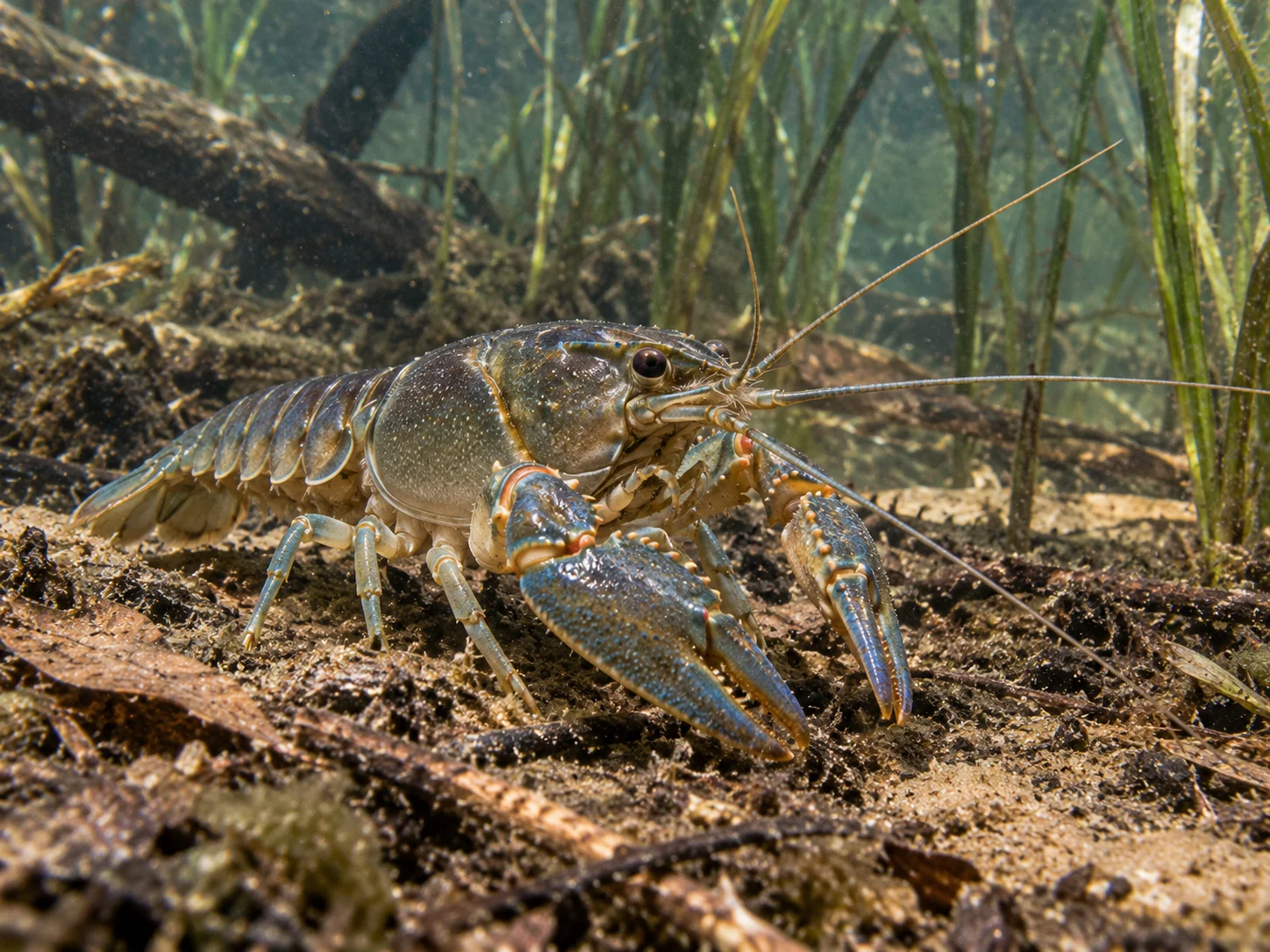
Yabbies average 4 to 8 inches (10 to 20 cm) long, and have been recorded up to 12 inches (30 cm). Females usually end up smaller than males.
- A smooth shell with one pair of ridges behind the eye sockets
- No spine on the shoulders behind the neck groove
- Two large front claws
- A fan-shaped tail used to shoot backward
- Color that changes with the water, not the season
That last point is worth knowing if you are trying to identify one. A yabby from clear water is dark, almost black, while a yabby from muddy turbid water is much lighter. Two animals of the same species from two dams can look nothing like each other.
Habitat and Range
Yabbies are common through Victoria and New South Wales and also live in southern Queensland, South Australia and parts of the Northern Territory, at low to middle elevations.
They will live in almost any still or slow fresh water: swamps, streams, rivers, reservoirs and, above all, farm dams. Australia has an enormous number of farm dams, and each one is a yabby habitat that did not exist two centuries ago.
Waiting Out a Drought
This is the yabby’s real trick, and it is the reason the species is so widespread.
In waterways that dry up, yabbies survive by lying dormant in burrows sunk deep into muddy creek and swamp beds, and they can hold out that way for several years. Not days or weeks. Years, in dry mud, waiting.
Cold triggers a milder version of the same response. Below 16 degrees Celsius a yabby enters partial hibernation, slowing down rather than shutting down completely.
For an animal that needs water to breathe, being able to survive its total absence for years is an extraordinary piece of engineering, and it is why an Australian creek that looks completely dead can be full of yabbies within weeks of rain.
Diet and Feeding
Yabbies feed mostly at night, and mostly on detritus: algae and the remains of plants breaking down on the bottom. They will take fish or animal remains when they come across them.
Juveniles are less settled about it, feeding as carnivores, herbivores and detritivores by turns, with zooplankton among their commonest foods.
Breeding and Life Cycle
A female carries her eggs with her, and how many she carries depends on how big she is: heavier females produce larger clutches. Fewer young usually hatch than there were eggs laid.
Development takes 33 to 42 days and runs faster in warmer water, within limits, which is why a warm summer produces yabbies quickly and a cool one does not.
Yabbying
The method has barely changed in generations. Tie a piece of meat to a length of string, throw it into the water, and wait. When a yabby grabs the meat, draw the line in slowly and scoop animal and bait together with a net.
It works because a yabby will not let go of food. The whole technique depends on the animal being stubborn.
There are rules. Most states set bag limits, and in South Australia it is illegal to take more than 200 yabbies. Certain nets and traps are banned or restricted, for a reason worth knowing: platypus, water rats and turtles get into them and drown.
Yabbies as Food and as a Pest
Yabbies are eaten in Australia much as crayfish are elsewhere, usually simply boiled. They are served in restaurants, sold live at Sydney Fish Market and cooked at Melbourne’s Queen Victoria Market, and they are a popular aquaculture species.
Aquaculture is also how they became a problem. Moved outside their natural range, yabbies are invasive in Western Australia, where they threaten the native gilgies, and in Tasmania. Introduced to Europe for farming, the yabby is now on the European Union list of invasive alien species of Union concern, so it cannot be imported, bred, transported, sold or released there.
So the same drought-proof toughness that makes a yabby successful at home makes it dangerous anywhere it is taken. That is the pattern behind most invasive species, and the yabby is a clean example of it.
Conservation Status
The IUCN lists the common yabby as Vulnerable, and that needs explaining, because it sits oddly beside the facts.
This is a species with the widest freshwater distribution in Australia, strong wild populations, a commercial fishery and a pest listing in two other places. It is not an animal anyone is worried about losing.
It is a useful illustration of a real limitation. A Red List entry reflects the assessment that was made, and an old assessment that has not been revisited can sit on the record long after the picture has changed. A listing is evidence, not a verdict, and it is worth checking how recent one is.
Role in the Ecosystem
Yabbies are the clean-up crew of Australian fresh water, working through dead plant material on the bottom and turning it into something other animals can use.
They are also food, and importantly so. Murray cod and golden perch, two of Australia’s significant native freshwater fish, depend on yabbies as a major part of their diet. A creek with no yabbies supports fewer of both.
And their burrows outlast them, like the burrows of so many digging animals, giving other creatures somewhere to shelter when the water goes down. Which it does, regularly, on the driest inhabited continent on Earth, where being able to wait is worth more than being able to swim.