Not Actually a Cobra
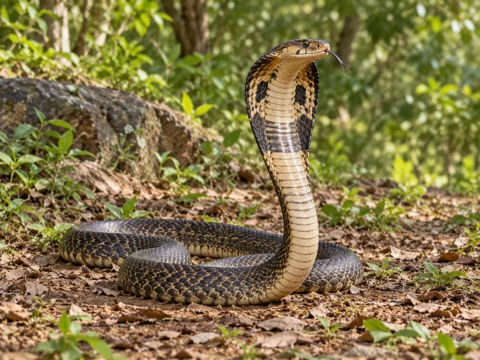
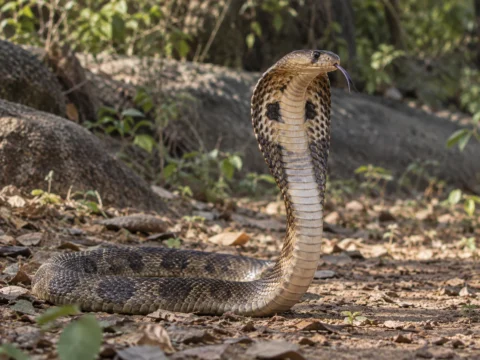
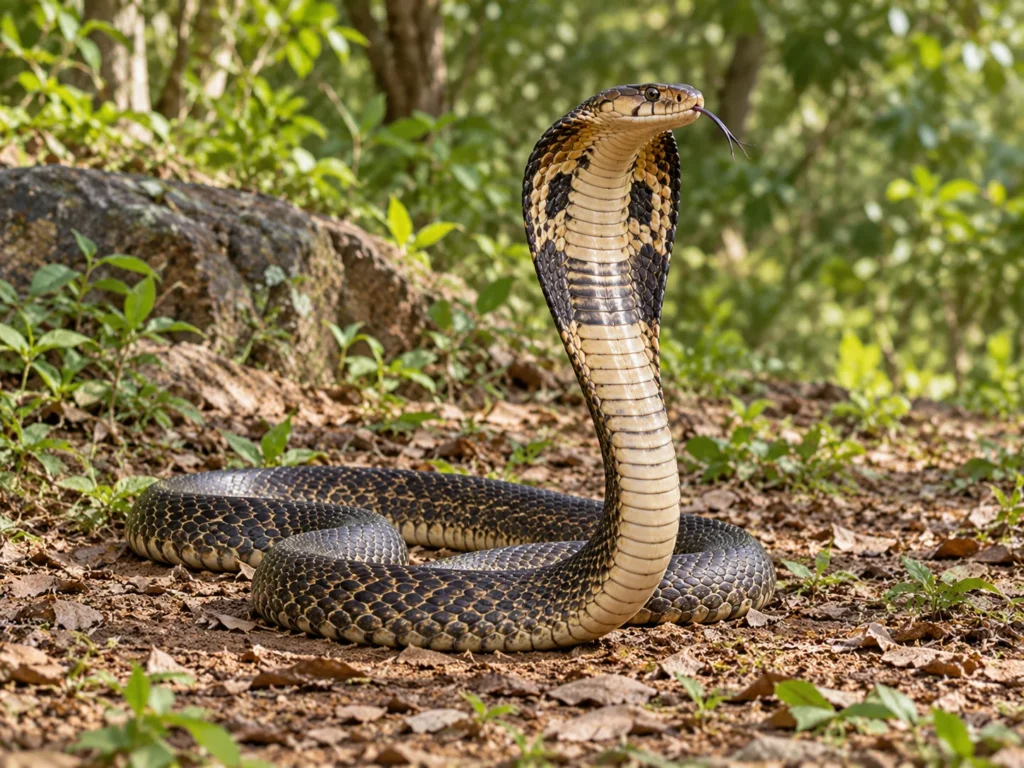
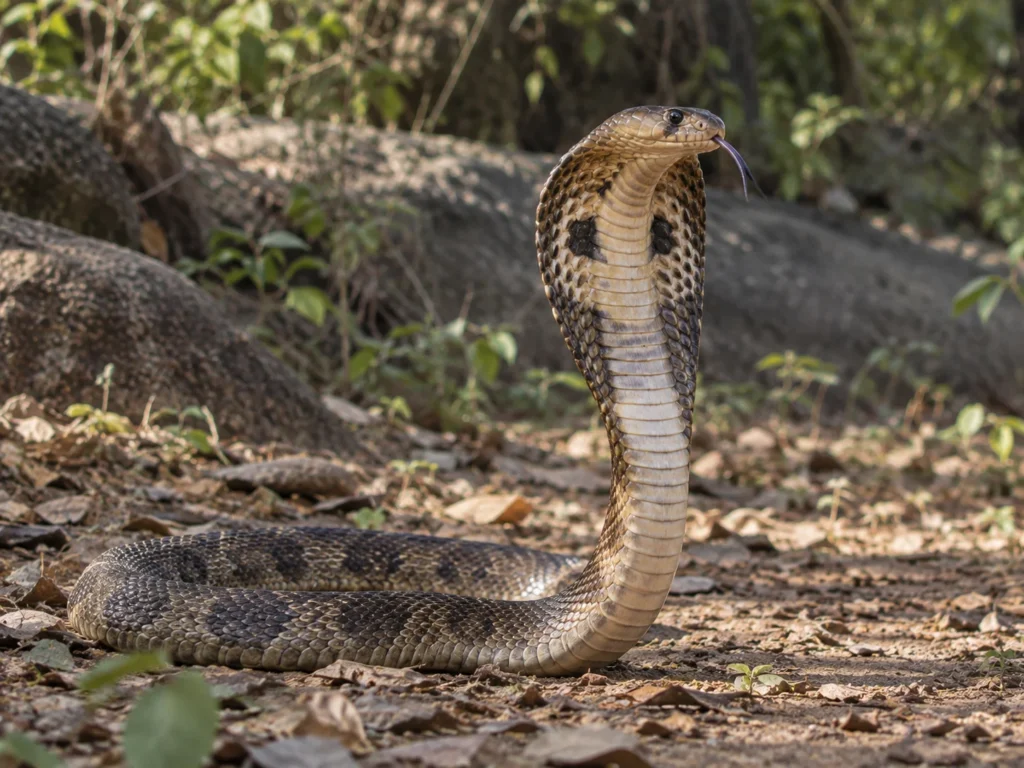
True cobras are the genus Naja, and there are around thirty species of them spread across Africa and Asia, including the Indian cobra, the Egyptian cobra and the spitting cobras. They are the snakes on the snake charmer’s basket and the ones most people picture.
The king cobra is Ophiophagus hannah, alone in its own genus. The name means snake eater, and it describes the animal better than the word cobra does. It is still an elapid and still a close relative, but calling it a cobra is a convenience of English rather than a statement about the family tree.
A Snake That Eats Snakes
Almost everything a king cobra eats is another snake, including rat snakes, pythons and other venomous species, and it will eat true cobras without hesitation. It appears to have considerable resistance to the venom of the snakes it hunts, which it would need.
True cobras are generalists by comparison, taking rats, mice, frogs, lizards, birds and eggs. That is exactly why they live so close to people: a village with grain has rats, and rats bring cobras. Most cobra bites in South Asia happen for that reason rather than from anyone going looking for one.
The Only Snake That Builds a Nest
No other snake on Earth does this. A female king cobra gathers dead leaves using a loop of her own body, pushes them into a mound two or three feet across, and lays twenty to forty eggs inside a chamber in the middle. The rotting leaves generate heat, which incubates the clutch.
Then she stays. She coils on top of the nest and guards it for two or three months, and this is the one time a king cobra is genuinely aggressive toward anything approaching. She leaves shortly before the eggs hatch, which is thought to stop her eating her own young. True cobras do none of this and simply deposit their eggs in a burrow or a termite mound.
Two Kinds of Danger
Drop for drop, a king cobra’s venom is not the most toxic. Several true cobras have venom that is stronger by weight. What makes a king cobra bite so serious is quantity, because it can inject a very large dose in one bite, enough in principle to kill an elephant.
In practice true cobras kill far more people, by an enormous margin. They are smaller, far more numerous, and live in fields and villages where people walk barefoot at dusk. King cobras live in forest, avoid people, and will usually rear up, growl and leave rather than strike. The dangerous snake is almost always the common one.
Spitting Cobras and the Rest of the Family
Several Naja species can spray venom from forward-facing holes in their fangs, aiming for the eyes from six feet away with real accuracy. It is a defense rather than a hunting method, and it causes severe pain and can blind a person who does not wash it out immediately. King cobras cannot spit.
One more thing separates them, and you can hear it. A threatened king cobra produces a low growl rather than a hiss, pitched far deeper than any other snake, because it has special pockets in its windpipe that act as resonating chambers. Once heard it is not mistaken for anything else.