Different Continents, Different Branches
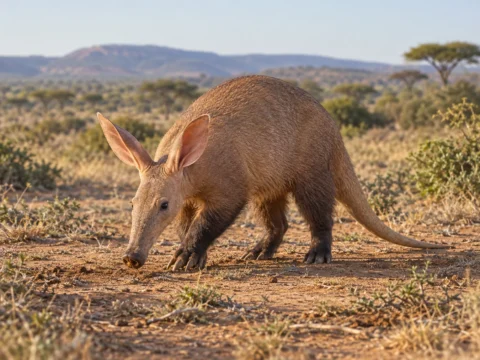
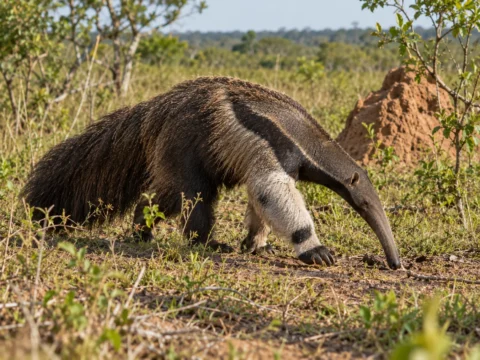
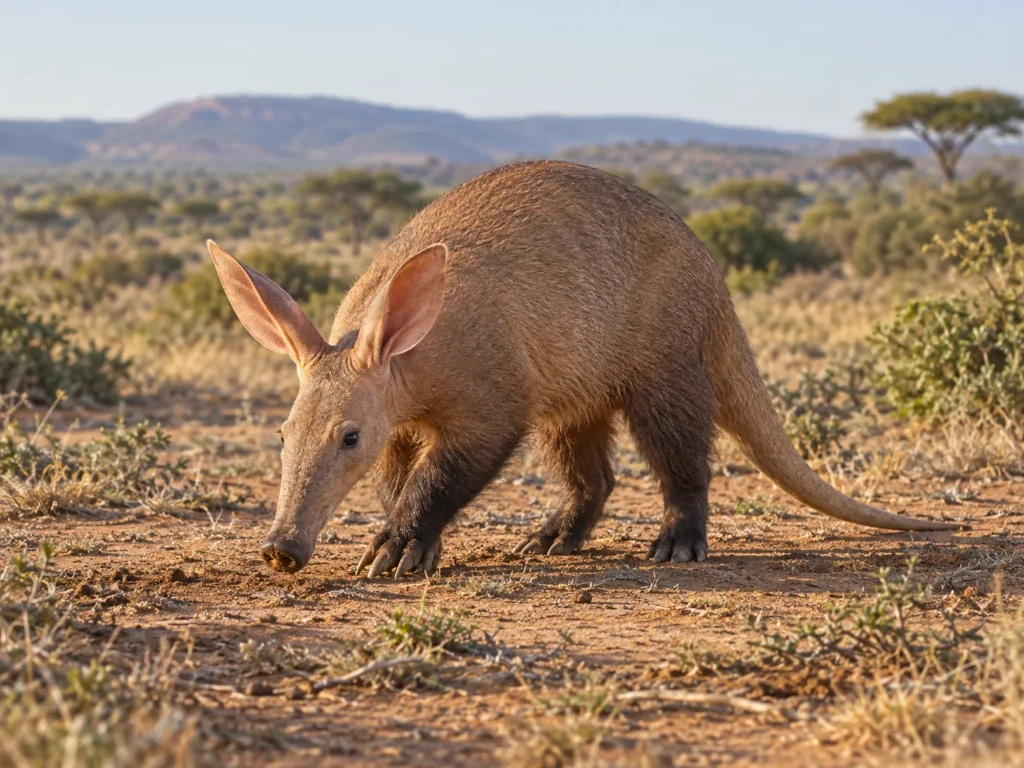
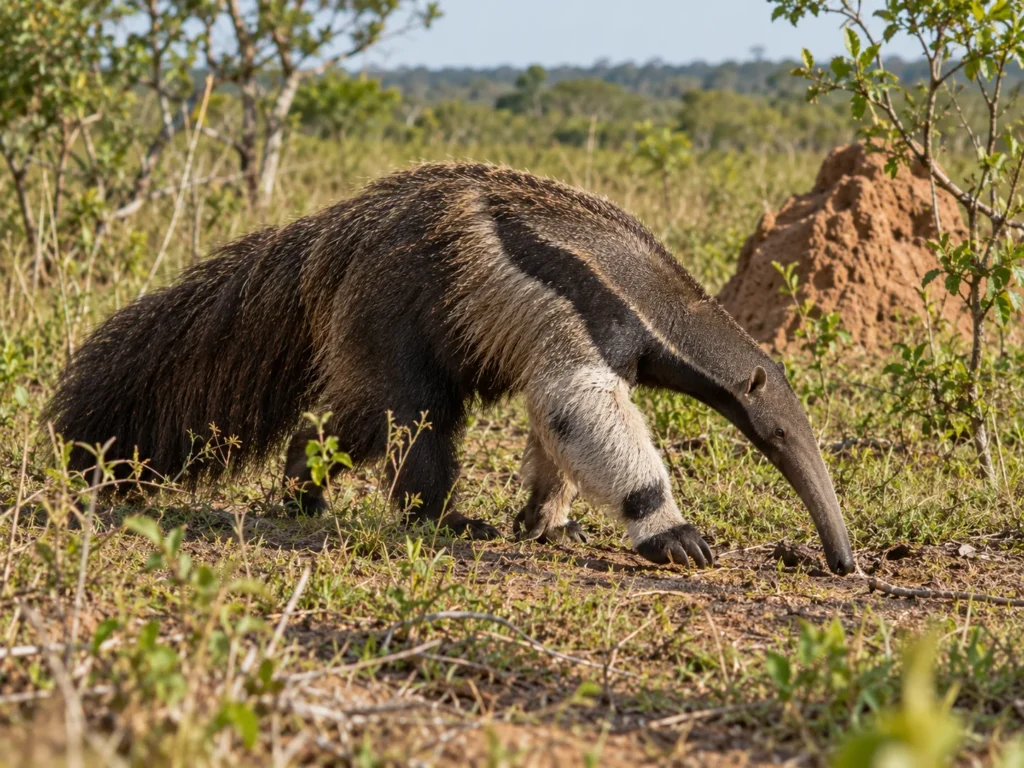
Start with the map, because it settles the question on its own. Aardvarks live across sub-Saharan Africa and nowhere else. Anteaters live from southern Mexico down through Central America into Argentina and nowhere else. No wild aardvark has ever met a wild anteater.
The family trees are further apart than the continents. The aardvark is the only living member of an entire order, Tubulidentata, and it belongs to the African group of mammals that also contains elephants, manatees and hyraxes. Anteaters belong to Xenarthra, a South American group whose other members are the sloths and armadillos. They are about as unrelated as two placental mammals can be.
Tongues Built for the Job
Both animals solved the same problem the same way. A giant anteater’s tongue is two feet long, thinner than a pencil, anchored to its breastbone rather than to the jaw, and coated in sticky saliva. It can flick in and out around 150 times a minute, which lets the animal strip a nest before the soldiers mount a defense.
An aardvark’s tongue is shorter at around twelve inches but works on the same principle, and an aardvark will take up to fifty thousand insects in a night. Both animals eat fast and move on rather than finishing a nest, which means the colony survives and the same animal can come back to it. That is less mercy than good management.
Digging Claws and Who Benefits
An aardvark is one of the fastest diggers alive and can sink itself into hard ground in minutes, hind feet throwing soil backwards. It digs burrows to sleep in, and because it keeps moving it leaves a trail of abandoned ones across the landscape. Warthogs, porcupines, hyenas, jackals, mongooses, owls and the African wild dog all use them. In some parts of Africa an aardvark is the only animal making holes big enough to shelter in, which makes it a keystone of the whole ecosystem.
An anteater’s claws are for opening nests rather than building homes. They are long and curved and so awkward on the ground that the animal walks on its knuckles with the claws folded back, in the same way a gorilla does. A giant anteater does not dig a burrow. It lies down, flips its tail over itself as a blanket and sleeps in the open.
No Teeth at All
An anteater has no teeth of any kind, not one, which is rare even among specialists. It grinds its food in a muscular stomach instead, and swallows grit to help with the work in much the way a bird uses a gizzard.
The aardvark kept teeth but unusual ones. They sit only at the back of the jaw, have no enamel, never stop growing, and are built of hundreds of thin tubes packed together. That structure is the reason the order is called Tubulidentata, which means tube-toothed, and no other mammal has anything like it.
The Other Ant Eaters
Several more animals have arrived at the same shape independently, and they are worth knowing because people mix them up constantly. The pangolin of Africa and Asia is covered in overlapping scales and is most closely related to cats and dogs. The echidna of Australia and New Guinea has spines and lays eggs. The numbat, also Australian, is a marsupial with a striped back that eats termites by day.
Five separate branches of the mammal family tree, five long snouts, five sticky tongues, five sets of digging claws. When a food source is as abundant and as well defended as a termite mound, evolution keeps producing the same answer.