The Tail Is the Whole Answer
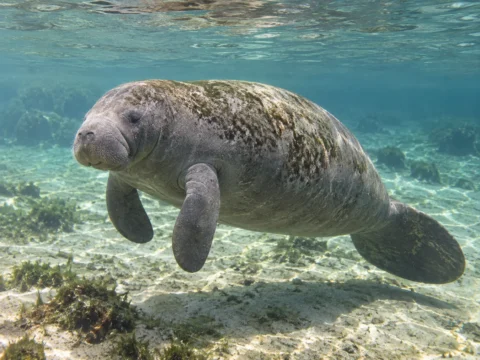
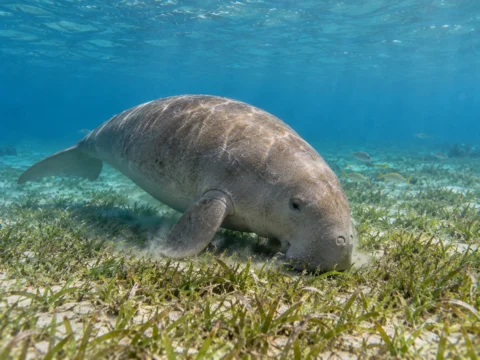
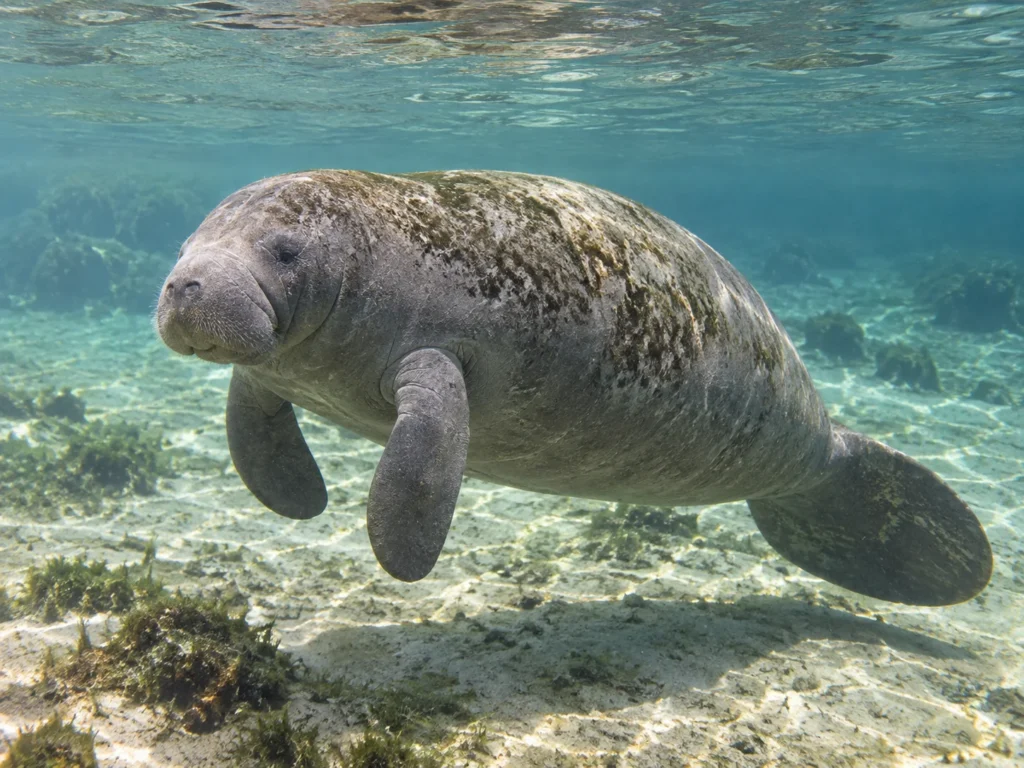
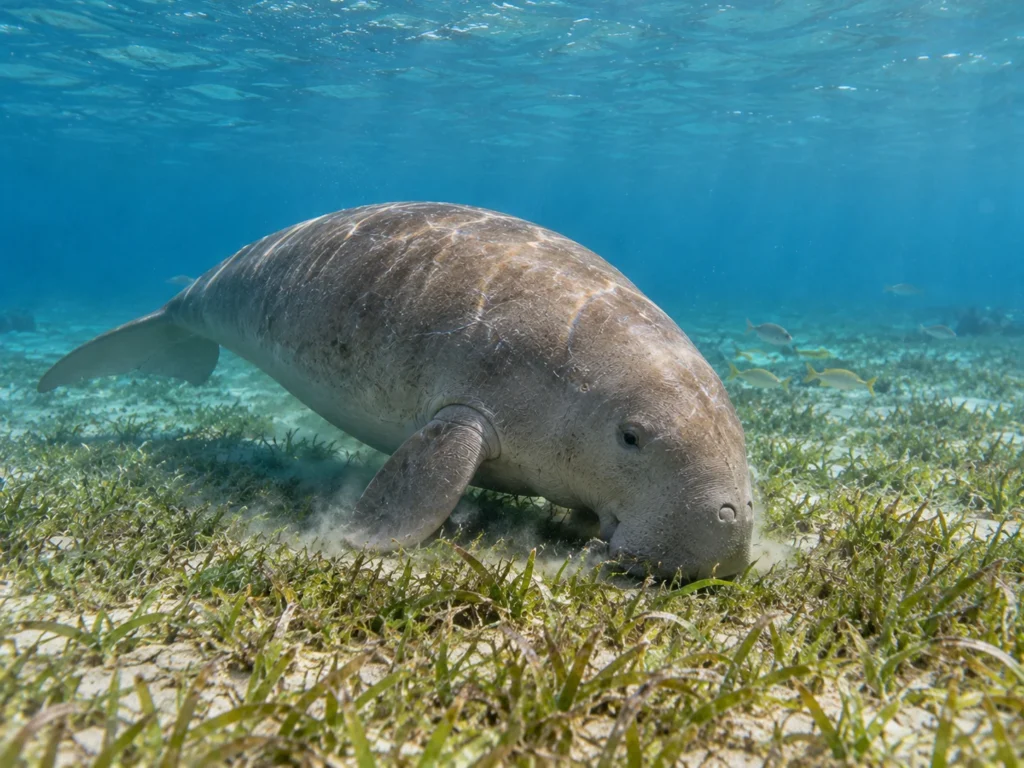
Everything else is detail. A manatee’s tail is one broad rounded paddle, and it beats up and down in a slow, heavy stroke. A dugong’s tail is split into two pointed flukes with a notch between them, so from behind it looks like a small whale.
It works on a photograph, on a murky underwater video and on an animal rolling at the surface. Nothing else about these two is as quick or as certain, so look for the tail first and treat the rest as confirmation.
River Animal, Sea Animal
Manatees move between fresh and salt water freely. Florida manatees spend winters crowded into warm freshwater springs, because they cannot survive long in water below about 68 degrees Fahrenheit, and the Amazonian manatee lives in fresh water its entire life and never sees the sea at all.
Dugongs never leave salt water. They live along the coasts of East Africa, the Red Sea, South and Southeast Asia and northern Australia, which holds the largest remaining population by a wide margin. The two animals do not overlap anywhere on Earth, so location alone usually answers the question before you see the tail.
Built to Graze
A dugong is a seagrass specialist, and its whole head is built for it. The snout angles sharply downward so the mouth points at the sea floor, and the animal plows along pulling up entire plants, roots included, leaving visible feeding trails in the meadow behind it. An adult works through around 60 pounds of seagrass a day.
A manatee’s snout points down less steeply, because a manatee eats at every level, from seagrass on the bottom to floating water hyacinth and even leaves hanging over a riverbank. All that grinding wears teeth out, so both animals replace them: new molars form at the back and move slowly forward along the jaw through life, the same conveyor belt an elephant uses.
Relatives of the Elephant
They look like seals and swim like whales, and they are closely related to neither. Manatees and dugongs belong to the order Sirenia, whose nearest living relatives are elephants and the hyraxes, and the shared ancestor was a land animal that walked into shallow water somewhere around fifty million years ago.
The evidence is still on the animals. A manatee has flat toenails on the front edge of each flipper, the remains of hooves. A male dugong grows short tusks that are true incisors, and they are structurally the same tooth as an elephant’s tusk. Neither has any trace of hind limbs left.
Mermaids, and a Warning From History
Sirenia is named for the sirens of Greek myth, because sailors seeing a large gray animal rear up at the surface with a baby held against its chest decided they were looking at a mermaid. Columbus recorded three off Hispaniola in 1493 and noted that they were considerably less beautiful than the stories had led him to expect.
There was a third sirenian until recently. Steller’s sea cow lived in the Bering Sea, grew to thirty feet, and was slow, trusting and easy to approach. It was described by science in 1741 and hunted to extinction by 1768, twenty-seven years later. Both surviving species are Vulnerable today, struck by boats, caught in nets and losing the seagrass meadows they depend on.