Eggs or Live Birth
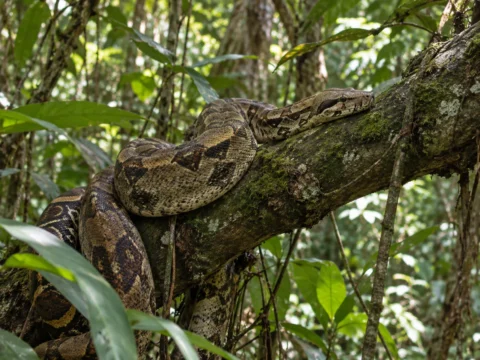
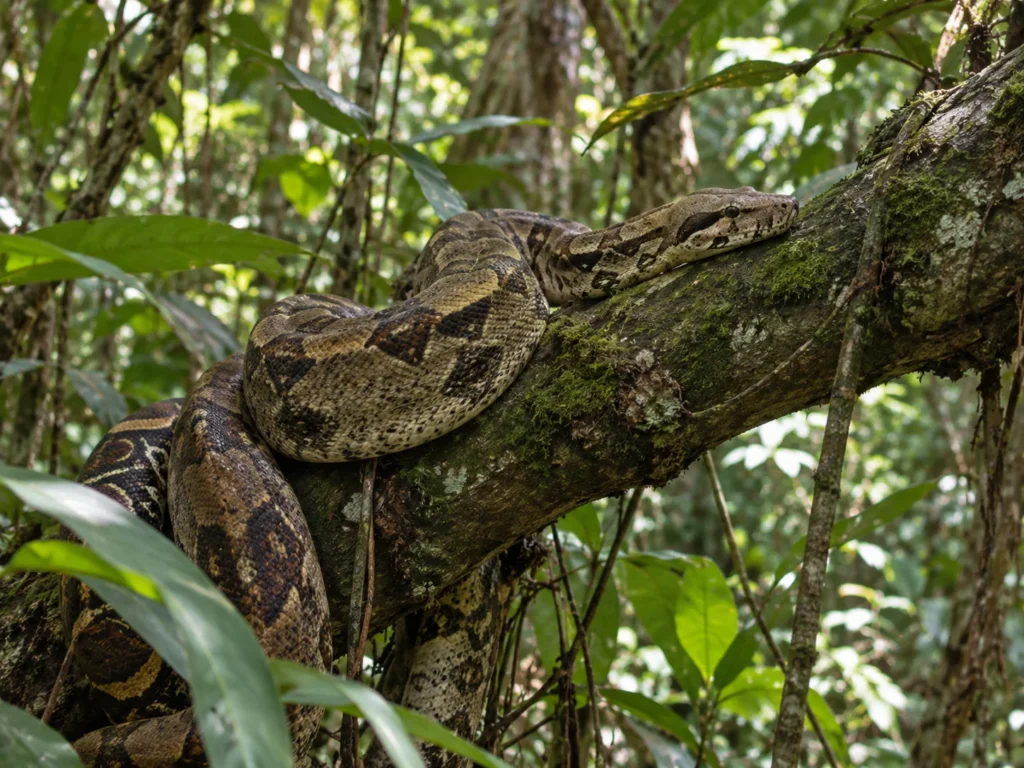
This is the difference that actually defines the two families. A female boa keeps her eggs inside her body until the young are fully formed, then gives birth to live babies, anything from ten to sixty of them, each one ready to hunt within a week.
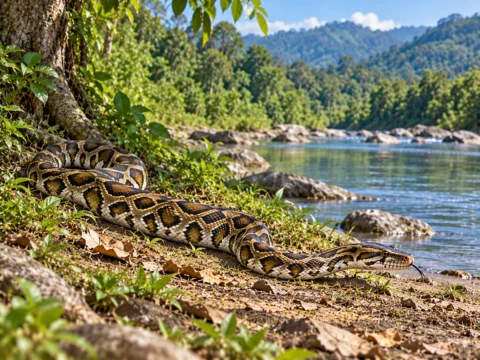
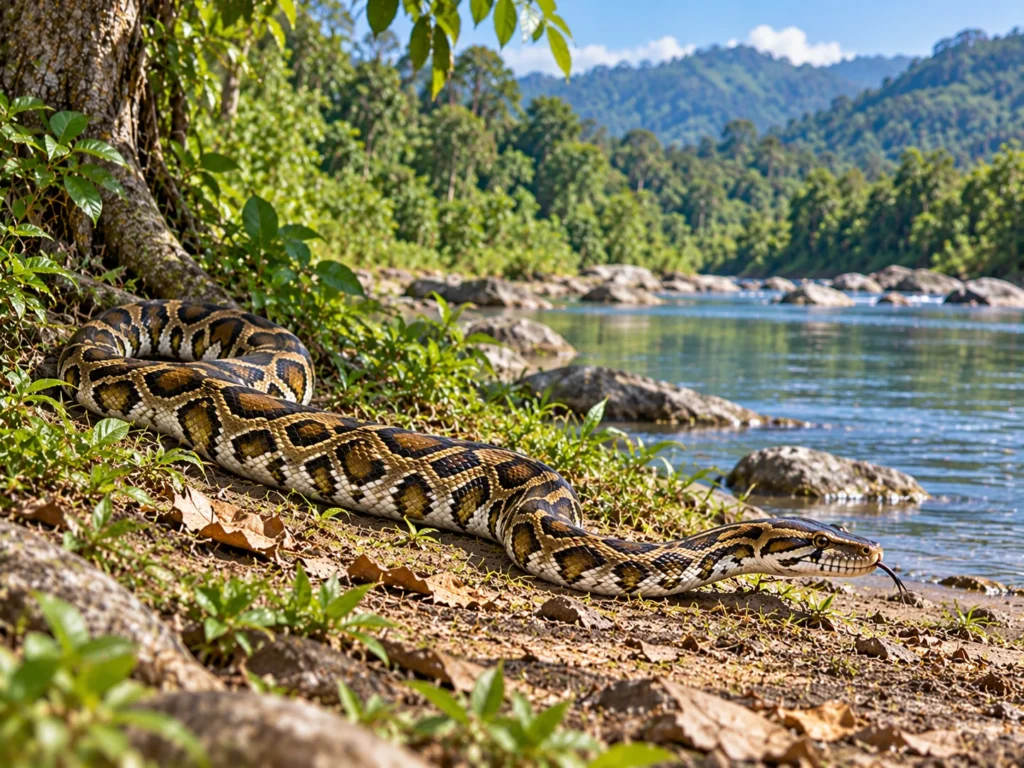
A female python lays eggs, often a hundred of them, and then does something almost no other snake does. She coils her whole body around the clutch and stays there for two or three months without eating, and in several species she shivers her muscles to generate heat and hold the eggs several degrees above the surrounding air. It is one of the few examples of real parental care in snakes.
Two Halves of the World
If you know where a wild snake was found you usually know which family it belongs to. Boas are the American side of the split, from Mexico down through the Amazon and into Argentina, with outlying groups on Madagascar and a few Pacific islands. Pythons are the Old World side, across sub-Saharan Africa, South and Southeast Asia, and Australia.
There is now one loud exception. Burmese pythons released or escaped in Florida have established a large breeding population in the Everglades, where they have no natural predators and have badly reduced the local mammals. In that one place, in the heart of boa territory, the big snake in the water is likely to be a python.
Reading the Head
Look at the top of the skull. A python carries large, flat, symmetrical plates arranged in a neat pattern, while a boa’s head is covered in many small irregular scales. It is the kind of detail that sounds fussy and is actually obvious once you see the two side by side.
Then look along the lip. Pythons have a row of deep heat-sensing pits set into the lip scales, and these read the warmth of a body in complete darkness, accurately enough to strike at a rat the snake has never seen. Boas have heat sensing too, but it usually sits between the scales rather than in obvious pits, so it is far harder to spot.
How a Constrictor Actually Kills
Neither family is venomous. Both grab with backward-pointing teeth, throw coils around the animal and tighten. The old explanation was suffocation, and it turns out to be wrong, or at least far too slow. What actually happens is that the pressure stops blood circulating, and the animal loses consciousness in seconds.
Afterwards the snake swallows the whole animal head first. Its lower jaw is in two halves joined by stretchy tissue, so the mouth opens far wider than the skull, and the snake walks its jaws forward over the body in alternating steps. A large meal can take hours to swallow and weeks to digest.
The Ones With Confusing Names
Anacondas cause most of the confusion. They are boas, in the genus Eunectes, and the green anaconda is the heaviest snake on Earth at up to 550 pounds. It is not the longest, though. That is the reticulated python of Southeast Asia, which can pass 25 feet while staying far slimmer.
The boa constrictor is just one species among many boas, which is worth remembering when people use the name for the whole family. And the rainbow boa, the rubber boa and the sand boas are all genuinely boas, which at least is one group of names behaving itself.